A snake in your garage requires immediate action to contain the animal and ensure everyone's safety. Snakes enter garages seeking warmth, shelter, and prey (rodents, insects). Most garage snakes are non-venomous, but any snake you cannot identify should be treated as potentially dangerous. This guide covers 3 critical steps.
Key Takeaways
- Stay calm and identify the snake from a safe distance before taking action.
- Open the garage door to give the snake an escape route. Most snakes will leave on their own.
- Use a long-handled tool to guide the snake out if it does not leave on its own.
- Call a professional for venomous snakes or if you are uncomfortable handling it.
Step 1: Contain the Snake
- Get everyone out of the garage, including pets. Close the door to the house so the snake cannot enter your living space.
- Identify the snake from a safe distance. Use a flashlight to see its head shape. Triangular head likely means venomous.
- Do not approach or corner the snake. A cornered snake may strike. Give it plenty of space.
- Do not try to kill the snake. This increases the risk of a bite.
Step 2: Remove the Snake
- Open the garage door wide. Most snakes will leave through the open door within 30 minutes if given space.
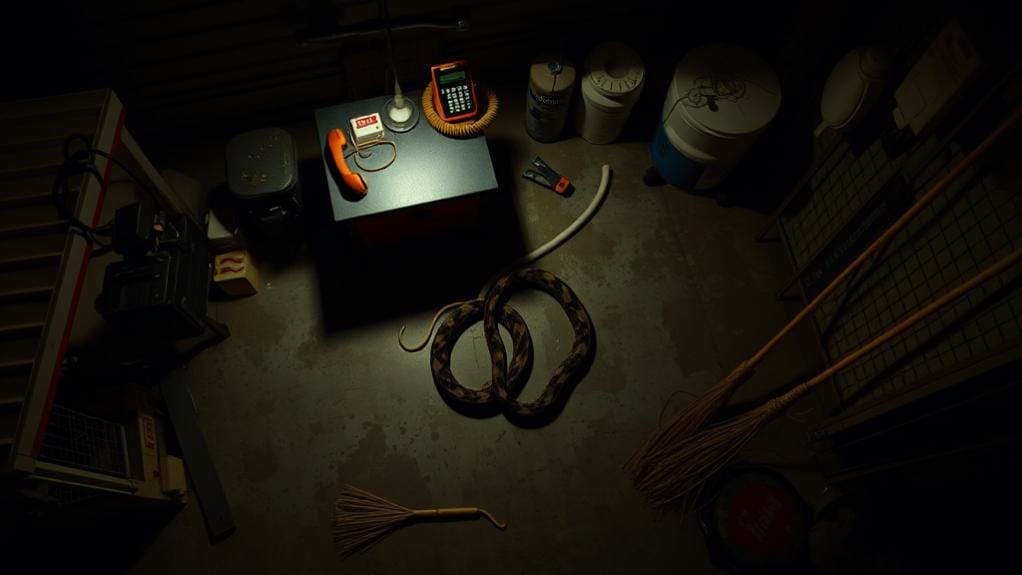
- Use a long-handled tool like a broom or shovel to gently guide the snake toward the open door if it does not leave on its own.
- Place a bucket or trash can over the snake if it is stationary and you have help. Slide a piece of cardboard under the bucket and carry it outside.
- Call a professional for venomous snakes or if the snake has hidden in a difficult-to-reach area.
Step 3: Prevent Future Incidents
- Seal gaps under the garage door with weatherstripping. Snakes can squeeze under a 1/4 inch gap.
- Cover vents and gaps around pipes with 1/4 inch hardware cloth.
- Remove clutter, wood piles, and hiding spots from the garage.
- Control rodent populations in and around the garage.
For more, read our snake barrier guide.
Frequently Asked Questions
How do snakes get into garages?
Snakes enter garages through gaps under the door, damaged weatherstripping, open vents, cracks in the foundation, and gaps around pipes. A gap of 1/4 inch is enough for a young snake. Inspect the garage perimeter regularly.
Will a snake leave my garage on its own?
Most snakes will leave within 30 minutes to 2 hours if the garage door is open and they have a clear escape route. If the snake has hidden inside a cabinet or wall, it may stay longer. Use gentle guidance with a long-handled tool.
Can a snake hide in my car in the garage?
Yes. Snakes can climb into engine bays, wheel wells, or under seats. If you suspect a snake has entered your car, leave the car doors open and check the engine bay with a flashlight before driving.
What should I do if I cannot find the snake in my garage?
If you saw a snake enter the garage but cannot find it, it has likely found a hiding spot. Leave the garage door open, place a few glue traps along the walls, and check every 4 hours. If you do not find it within 24 hours, call a professional.
The Bottom Line
A snake in your garage is manageable if you stay calm. Contain the snake by closing the house door, open the garage door to give it an escape route, and guide it out with a long-handled tool if necessary.
Most snakes leave on their own within 30 minutes. After removal, seal gaps under the garage door, cover vents, and remove clutter to prevent future incidents.