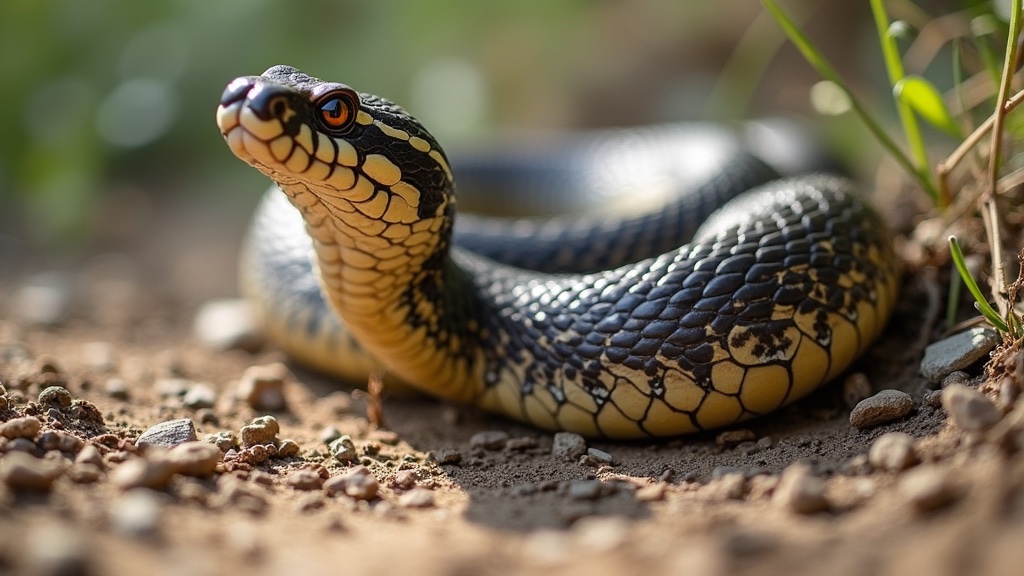
Baby snakes are born with venom that is just as potent as adults, but they may be more dangerous because they cannot control how much venom they inject. A common myth is that baby snakes are more venomous than adults.
This is false. Their venom is the same strength, but their smaller size means less venom volume per bite. However, they may deliver a full defensive dose because they cannot regulate their venom output as precisely. This guide covers the facts.
Key Takeaways
- Baby venomous snakes have the same venom potency as adults, but their smaller venom glands hold less venom.
- They cannot control their venom output as precisely as adults, so they may deliver a full defensive dose.
- Baby snakes are harder to see and more likely to be accidentally stepped on or touched.
- Any snake bite from a venomous species should be treated as a medical emergency, regardless of the snake's age.
In This Guide
The Myth: Baby Snakes Have More Potent Venom
A persistent myth claims that baby venomous snakes are more dangerous because their venom is more concentrated or potent. This is not supported by scientific evidence.
Studies show that venom composition and potency remain consistent throughout a snake's life. The myth likely originated from the fact that baby snakes cannot control their venom output and may deliver a full defensive bite, wasting their limited venom on display rather than economy.
The Facts About Baby Snake Venom
>- Same venom composition: The proteins and toxins in baby snake venom are identical to adults of the same species.
- Less total venom: Baby snakes have smaller venom glands, so a bite contains less venom overall.
- Less control: Young snakes have less control over how much venom they inject. They may deliver a full defensive dose.
- Harder to avoid: Baby snakes are smaller and more camouflaged, making them easier to step on or accidentally touch.
- Still dangerous: A bite from a baby venomous snake can still cause serious symptoms and requires medical treatment.
For more, read our venomous vs non-venomous guide.
Frequently Asked Questions
Can a baby snake kill a human?
Yes, a baby venomous snake can kill a human, especially a child or small adult. While the smaller venom volume may make death less likely than from an adult's bite, any venomous snake bite is a medical emergency requiring immediate treatment.
Are baby copperheads more dangerous than adults?
Baby copperheads have the same venom potency as adults but less total venom. They are harder to see and more likely to be stepped on. Their inability to control venom output means they may deliver a full defensive dose. Treat any copperhead bite as a medical emergency.
Do baby snakes have fangs?
Yes. Baby venomous snakes are born with fully functional fangs and venom glands. They can deliver a venomous bite immediately after birth. They do not need to mature before their venom system becomes active.
How can I identify a baby venomous snake?
Baby venomous snakes have the same identifying features as adults: triangular head, vertical slit pupils, and heat-sensing pits (pit vipers). They may have brighter colors and a more defined pattern than adults. A brightly colored juvenile with a triangular head is likely a baby venomous snake.
The Bottom Line
Baby venomous snakes have the same venom potency as adults but less total venom. They are more dangerous in some ways because they cannot control their venom output and are harder to see.
The myth that baby snakes have more potent venom is false. Any snake bite from a venomous species, regardless of the snake's age, requires immediate medical attention. Treat all venomous snakes with equal caution.