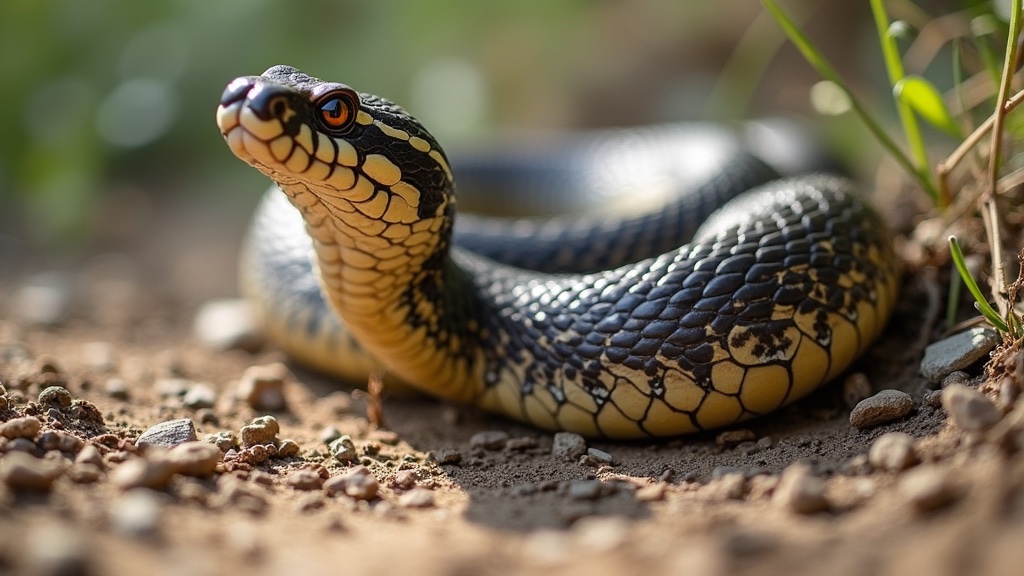
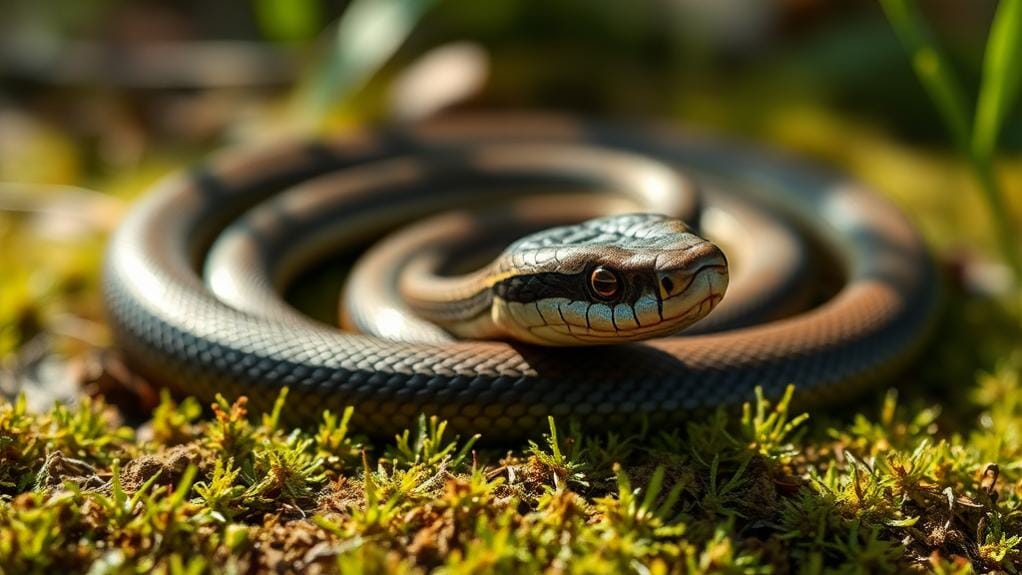
Common garden snakes are usually garter snakes, which are non-venomous and beneficial for pest control. Garter snakes (genus Thamnophis) are the most frequently encountered snakes in gardens and yards.
They eat insects, slugs, and worms, making them helpful garden visitors. This guide covers how to identify common garden snakes and other species you may encounter.
Key Takeaways
- Most garden snakes are garter snakes (Thamnophis species), which are harmless and beneficial.
- Garter snakes have three distinct stripes running the length of their body.
- They grow to 18-26 inches and are slender in build.
- Other common garden snakes include rat snakes, black racers, and green snakes.
In This Guide
Garter Snake Identification
>- Three light-colored stripes running lengthwise along a dark background
- Slender body reaching 18 to 26 inches long
- Rounded head not wider than the neck (non-venomous feature)
- Keeled scales giving a rough texture
- Color varies from greenish-brown to black, with yellow or white stripes
- Found across North America in gardens, fields, and near water
Other Common Garden Snakes
| Species | Appearance | Size | Temperament |
|---|---|---|---|
| Garter Snake | Striped, slender | 18-26 inches | Docile, may musk |
| Rat Snake | Black or gray, large | 3-6 feet | Good climber, non-aggressive |
| Black Racer | Solid black, fast-moving | 3-5 feet | Active, may flee quickly |
| Smooth Green Snake | Bright green, small | 12-20 inches | Docile, rarely bites |
| Dekay's Brown Snake | Brown with lighter stripe | 9-13 inches | Very docile, small |
| Ring-necked Snake | Gray-brown with yellow ring | 10-14 inches | Secretive, rarely seen |
Why Garden Snakes Are Beneficial
>- Eat garden pests: Slugs, snails, insects, and worms are the primary diet of garter snakes.
- Rodent control: Larger garden snakes like rat snakes eat mice and voles.
- Non-venomous: All commonly encountered garden snakes are harmless to humans and pets.
- Part of the ecosystem: They serve as prey for hawks, owls, and larger wildlife.
For more, read our venomous-vs-non- href="/how-to-identify-venomous-vs-non-venomous-snakes/">venomous-snakes/">venomous vs non-venomous guide. No. Common garden snakes like garter snakes, rat snakes, and green snakes are non-venomous and harmless to humans and pets. They may release a musky odor if handled but cannot seriously injure a person. Garden snakes have a rounded head, round pupils, and slender bodies. Venomous snakes have triangular heads, vertical slit pupils, and thicker bodies. If you cannot identify it, keep a safe distance. Garden snakes are beneficial and should be left alone. They control slugs, insects, and other pests. If you find one in your garden, simply give it space and it will move on. Only remove it if it has entered your home or garage. Garter snakes eat earthworms, slugs, snails, small amphibians, and insects. They are beneficial in gardens because they help control these pests without harming plants. They are active during the day and often found near moist areas. Common garden snakes, primarily garter snakes, are non-venomous and beneficial for pest control. They eat slugs, insects, and worms without harming plants. Most garden snakes are harmless and should be left alone. The striped pattern of garter snakes is their most distinctive identification feature. If you find a snake in your garden, take a photo and use this guide to identify it. Most are beneficial visitors, not threats.Frequently Asked Questions
Are garden snakes dangerous?
How can I tell a garden snake from a venomous snake?
Should I remove garden snakes from my yard?
What does a garter snake eat?
The Bottom Line