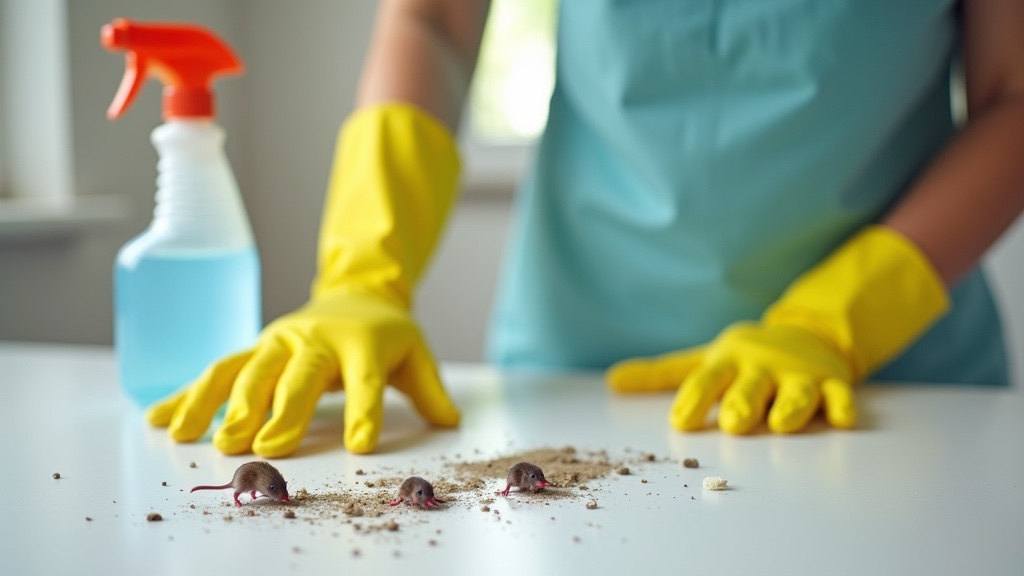
Cleaning up after a rodent infestation requires careful procedures to avoid exposure to hantavirus, leptospirosis, and other pathogens. Never sweep or vacuum rodent droppings. Dry methods aerosolize dangerous particles. Always use wet cleaning methods with disinfectant.
Key Takeaways
- Wear PPE: N95 respirator, gloves, and disposable coveralls are required for safe cleanup.
- Wet method only: Spray droppings with bleach solution (1:9). Let sit 5 minutes. Wipe with paper towels.
- Dispose properly: Double-bag all waste in sealed plastic bags. Dispose in outdoor trash.
- Disinfect surfaces: Use an EPA-registered disinfectant or bleach solution on all affected surfaces.
- Replace insulation: Rodent-contaminated insulation cannot be cleaned. It must be removed and replaced.
Step-by-Step Cleanup
Follow these steps in order for safe rodent cleanup: Step 1: Put on PPE including an N95 respirator, disposable gloves, coveralls, and safety goggles. Step 2: Open windows for ventilation. Step 3: Spray droppings and nesting material with a 10% bleach solution (1 part bleach to 9 parts water). Step 4: Let sit for 5 minutes to neutralize pathogens. Step 5: Wipe up with paper towels. Step 6: Place all waste in a sealed plastic bag. Step 7: Disinfect surfaces with the bleach solution. Step 8: Dispose of bags in outdoor trash.
Health Warning
If you experience flu-like symptoms within 6 weeks of cleaning a rodent-infested area, see a doctor. Mention your rodent exposure. Hantavirus and leptospirosis are treatable if caught early. See our diseases from rats and mice guide for more information.
Dealing With Contaminated Insulation
Rodent-contaminated insulation cannot be effectively cleaned. Droppings, urine, and nesting materials soak into fiberglass and cellulose insulation, creating a permanent health hazard. Any insulation with visible droppings, urine staining, or odor should be removed and replaced. Wear full PPE during removal. Bag the contaminated insulation directly into heavy-duty trash bags. After removal, disinfect the area before installing new insulation.
Treating Secondary Insect Pests After Cleanup
Rodent infestations often leave behind more than just droppings and urine. Dead rodents, nesting materials, and contaminated insulation attract secondary insect pests including dermestid beetles, carpet beetles, flies, and mites. These insects can spread throughout your home after the rodents are removed, creating a new problem. To prevent this, treat affected areas with a natural insect powder after cleanup. Dr. Killigan’s Dust to Dust Insect Powder is a plant-based, non-toxic powder (EPA exempt under FIFRA 25(b)) that kills insects on contact. It is safe around pets and children and remains effective for up to 6 months. Use code ALESSIO07889 for 10% off at Dr. Killigan’s.
Pro Tip
Apply Dr. Killigan’s Dust to Dust powder in wall voids and attic spaces after rodent removal. The powder stays effective for months, providing ongoing protection against insects attracted to rodent waste. Get 10% off at Dr. Killigan’s.
Frequently Asked Questions
Can I vacuum rodent droppings?
No. Vacuuming aerosolizes hantavirus particles. Only use a HEPA vacuum rated for hazardous materials, and even then, wet cleaning is preferred.
How long does hantavirus survive in droppings?
Hantavirus can survive in dried droppings for days or weeks. Always treat any rodent droppings as hazardous regardless of age.
Do I need to replace attic insulation?
Any insulation with visible droppings, urine staining, or odor should be replaced. It cannot be cleaned effectively.
Related Resources
For disease information, see diseases from rats and mice guide. For identification, see rat vs mouse droppings ID guide. For elimination, read how to get rid of mice and rodent proofing guide.
Why Trust Us
WildAnimalsCentral.com provides cleanup guidance based on CDC and NIOSH guidelines for hantavirus prevention and OSHA respiratory protection standards.