Rat and mouse droppings look similar at first glance, but they differ in size, shape, and quantity in ways that help you identify which rodent you are dealing with. Identifying the type of rodent from its droppings is important because rats and mice require different control strategies. Rats are neophobic and cautious, while mice are curious and easier to trap. This guide covers how to tell rat droppings from mouse droppings at a glance.
Key Takeaways
- Size: Rat droppings are 1/2 to 3/4 inch long. Mouse droppings are 1/8 to 1/4 inch long, about half the size.
- Shape: Rat droppings are capsule-shaped with blunt ends. Mouse droppings are rod-shaped with pointed ends.
- Quantity: A single rat produces 40 to 50 droppings per day. A mouse produces 50 to 80 per day.
- Location: Rat droppings are found in fewer, larger piles. Mouse droppings are scattered randomly along travel routes.
- Health risk: Both carry diseases. Rats carry leptospirosis and plague. Mice carry hantavirus and salmonella.
In This Guide
Side-by-Side Comparison
| Feature | Rat Droppings (Rattus norvegicus) | Mouse Droppings (Mus musculus) |
|---|---|---|
| Size | 1/2-3/4 inch (12-20 mm) | 1/8-1/4 inch (3-6 mm) |
| Shape | Capsule-shaped, blunt ends | Rod-shaped, pointed ends |
| Color | Dark brown to black, glossy when fresh | Dark brown to black, dull when fresh |
| Quantity per day | 40-50 droppings per rat | 50-80 droppings per mouse |
| Accumulation | Fewer, larger piles | Scattered randomly in clusters |
| Location | Along walls, near food sources | Anywhere mice travel, walls, cabinets, drawers |
| Smell | Strong musky odor in large accumulations | Milder, less noticeable odor |
| Health risk | Leptospirosis, plague, rat-bite fever | Hantavirus, salmonella, LCMV |
Key Differences at a Glance
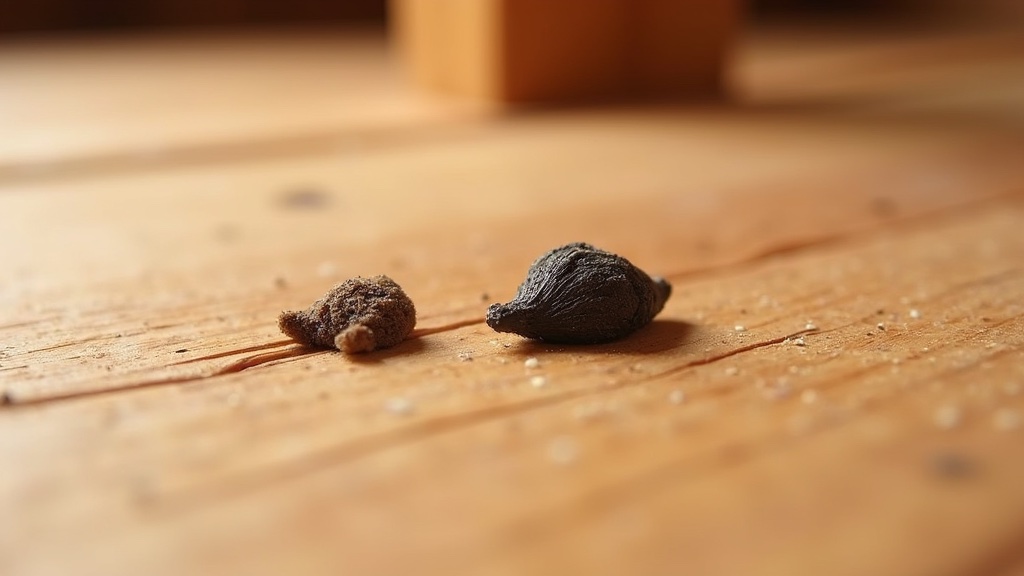
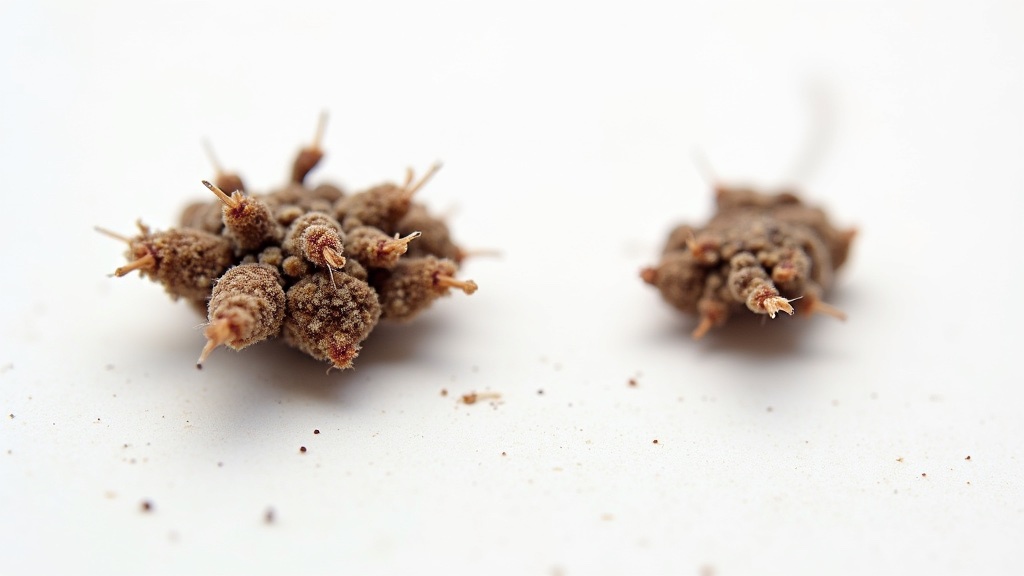
The most reliable way to distinguish rat droppings from mouse droppings is size. Rat droppings are 1/2 to 3/4 inch long, about the size of an olive pit. Mouse droppings are 1/8 to 1/4 inch long, about the size of a grain of rice. If you need a ruler, rat droppings are longer than the diameter of a dime, while mouse droppings are shorter.
Shape is the second most reliable indicator. Rat droppings are capsule-shaped with blunt, rounded ends. They are thicker and more uniform in shape. Mouse droppings are rod-shaped with pointed ends, resembling a grain of rice with tapered tips. Norway rat (Rattus norvegicus) droppings are thicker than roof rat (Rattus rattus) droppings, but both are larger than mouse droppings.
Pro Tip
If you find droppings of varying sizes, you may have both rats and mice. This is uncommon but possible. Use the larger droppings to determine the primary species. For a complete comparison with bat droppings, see our bat guano vs mouse droppings guide.
Health Risks of Rodent Droppings
Both rat and mouse droppings carry serious health risks.
Rat droppings: Can carry Leptospira bacteria causing leptospirosis, Yersinia pestis causing plague, and Streptobacillus moniliformis causing rat-bite fever. Rat droppings are also associated with asthma and allergy symptoms. Norway rats are the primary urban carrier of leptospirosis.
Mouse droppings: Can carry Sin Nombre hantavirus causing Hantavirus Pulmonary Syndrome, Salmonella bacteria, and lymphocytic choriomeningitis virus (LCMV). Hantavirus is often fatal and has no specific treatment or cure.
Cleanup: Never sweep or vacuum rodent droppings. Always wet-clean with disinfectant. Spray droppings with a bleach solution (1:9), let sit for 5 minutes, then wipe with paper towels. Wear gloves and an N95 respirator at minimum. For more information, see our diseases from rats and mice guide.
Frequently Asked Questions
Can I tell rat vs mouse from droppings alone?
Yes, in most cases. Size is the most reliable indicator. Rat droppings are 1/2 to 3/4 inch, mouse droppings are 1/8 to 1/4 inch. If you are unsure, look for other signs like gnaw marks, tracks, and sounds. See our rat vs mouse differences guide.
How long do rodent droppings remain hazardous?
Hantavirus can remain infectious in dried droppings for days or weeks. Leptospira bacteria can survive in moist droppings. Always treat any rodent droppings as hazardous regardless of how old they appear.
Do rat droppings look different from roof rat droppings?
Norway rat droppings are thicker and more capsule-shaped. Roof rat (Rattus rattus) droppings are more slender with pointed ends, similar to mouse droppings but larger. Both are 1/2 inch or longer.
How do I clean rodent droppings safely?
Spray with bleach solution (1:9), let sit 5 minutes, wipe with paper towels. Dispose in sealed bag. Wear gloves and N95 respirator. Never vacuum or sweep dry droppings.
Related Resources
For bat droppings comparison, see bat guano vs mouse droppings guide. For diseases, read diseases from rats and mice. For species identification, see rat vs mouse key differences.
Why Trust Us
WildAnimalsCentral.com provides rodent identification content based on CDC guidelines, peer-reviewed research, and consultations with pest control professionals. Our health risk information is verified against current CDC and WHO publications.