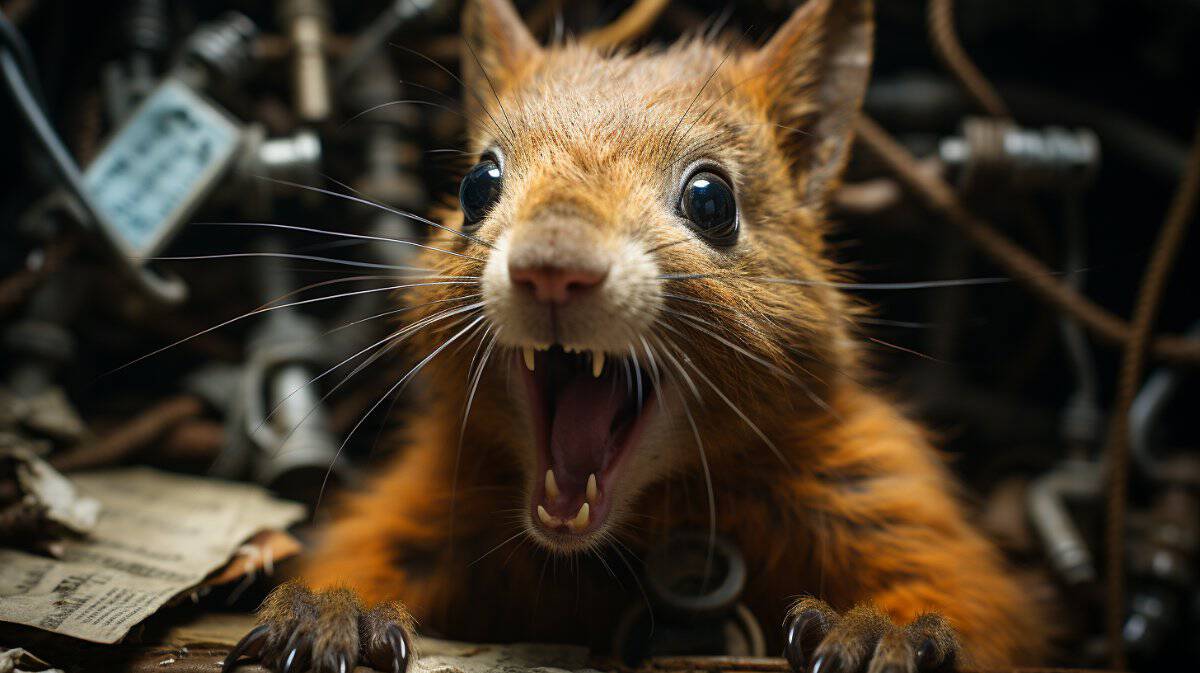
Squirrels cannot chew through galvanized steel, stainless steel, 1/4 inch hardware cloth, solid brick, or fully cured concrete. Their incisors, which grow up to 6 inches per year, can handle wood, plastic, aluminum, drywall, and vinyl with ease.
But hard metals and dense masonry stop them cold. This guide covers every common building and household material, ranked by squirrel resistance, so you know exactly what to use for exclusion work.
Key Takeaways
- Squirrels chew through wood, plastic, vinyl, aluminum, drywall, and copper without difficulty.
- Galvanized steel, stainless steel, and 1/4 inch hardware cloth are fully squirrel-proof.
- Brick and concrete are chew-resistant, but deteriorated mortar can be exploited.
- Always use 1/4 inch galvanized hardware cloth for exclusion work. Chicken wire and expanded metal lath are not adequate.
In This Guide
Why Do Squirrels Chew?
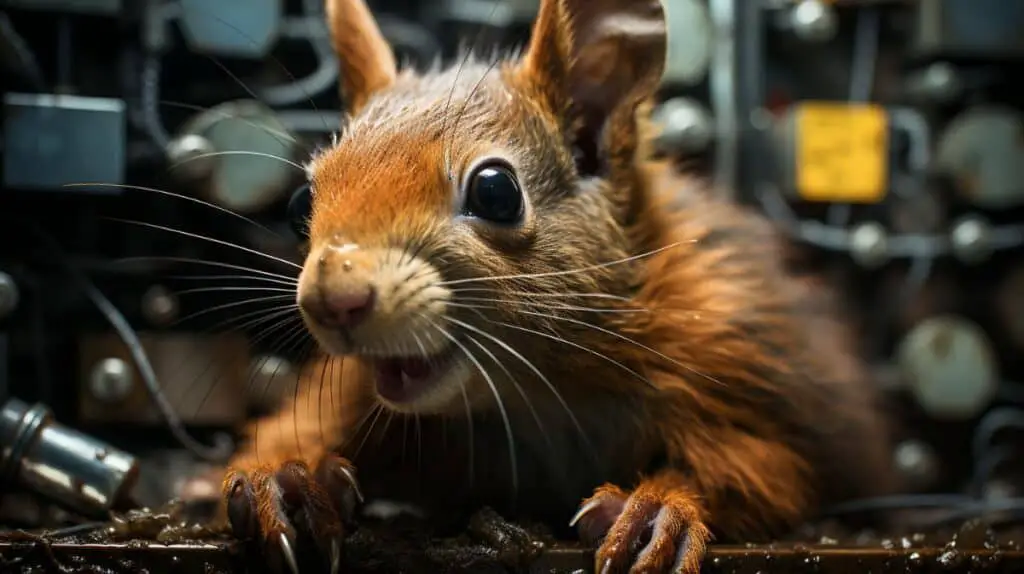
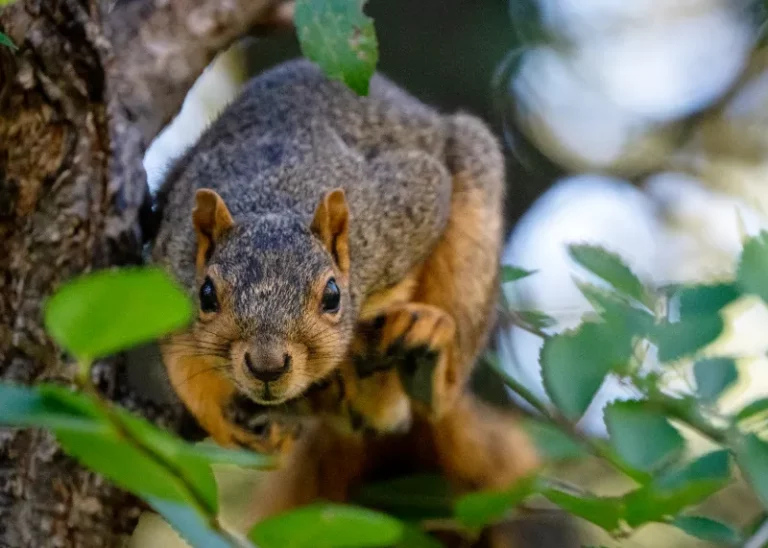
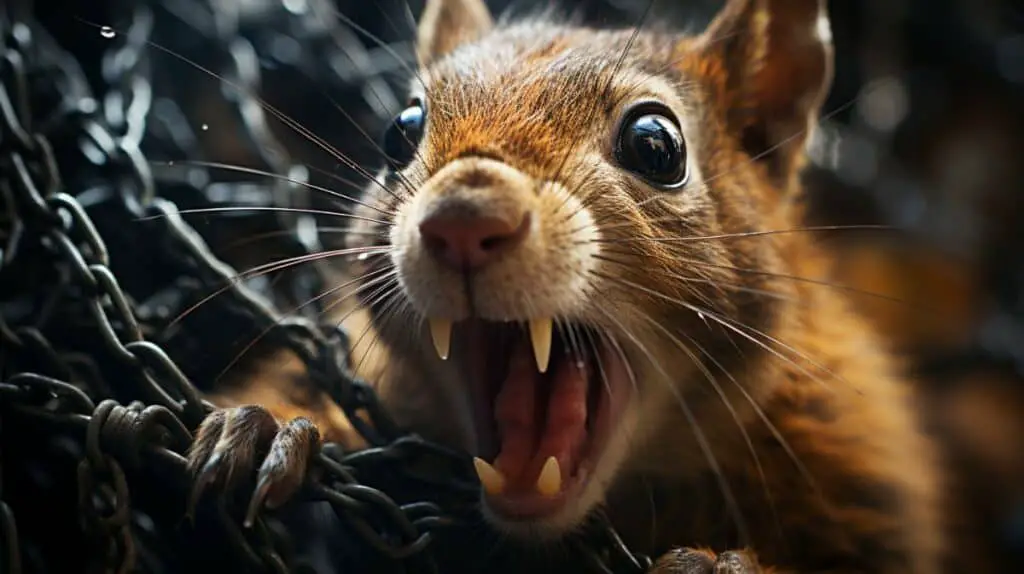
Squirrels do not chew out of malice or hunger for your house. Chewing is a biological necessity. The four front incisors of an eastern gray squirrel (Sciurus carolinensis) grow continuously at a rate of about 6 inches per year.
Gnawing on hard surfaces wears the teeth down to a functional length. Without constant chewing, a squirrel's teeth would grow through its skull.
Beyond dental health, squirrels chew to access food and shelter. They gnaw through nut shells, tree bark, and eventually the building materials that stand between them and a warm attic or a stored food cache. Understanding what stops them and what does not is the key to effective exclusion.
Complete Material Resistance Guide
Here is the definitive breakdown of common materials and how eastern gray squirrels (Sciurus carolinensis) and fox squirrels (Sciurus niger) handle them:
| Material | Can Squirrels Chew It? | Best Use for Exclusion |
|---|---|---|
| Drywall / Gypsum board | Yes, easily | Back with 1/4 inch hardware cloth before patching |
| Wood (pine, cedar, plywood) | Yes, easily | Cover with galvanized steel flashing or hardware cloth |
| Vinyl siding | Yes, easily | Replace damaged sections with steel or aluminum |
| Plastic (PVC, ABS) | Yes, easily | Protect with metal conduit or hardware cloth wrap |
| Aluminum (soft) | Yes, with effort | Replace with galvanized steel for permanent protection |
| Copper | Yes, with effort | Use steel wool + expanding foam as a temporary filler |
| Chicken wire / poultry netting | Yes, easily | Do not use for squirrel exclusion; they chew through it |
| Expanded metal lath | Can be bent | Better than chicken wire but not as good as hardware cloth |
| Steel wool | Can be pulled apart | Use as a temporary filler only, combined with caulk |
| 1/4 inch galvanized hardware cloth | No | The gold standard for all squirrel exclusion work |
| Galvanized steel (22-gauge+) | No | Best for flashing, undershields, and durable barriers |
| Stainless steel mesh | No | Excellent for vent covers and chimney caps |
| Solid brick (fired clay) | No | Check mortar joints; repoint with Type S mortar if worn |
| Concrete (fully cured) | No | Seal cracks wider than 1/4 inch with hydraulic cement |
| Glass | No | Not a practical exclusion material, but fully resistant |
Read our detailed guide on what to do about squirrel-chewed walls for specific repair steps.
Materials Squirrels Chew Through Easily
These materials offer little to no resistance and should never be relied on as squirrel barriers:
- Drywall: A squirrel can punch through standard 1/2 inch drywall in under 5 minutes. The gypsum core offers no resistance to incisors.
- Wood (softwoods): Pine, cedar, and plywood are common nesting targets. Squirrels chew through fascia boards, soffits, and eaves regularly.
- Vinyl and plastic: Garbage cans, bird feeders, pipe insulation, and plastic vent covers are routinely destroyed.
- Aluminum: Softer aluminum alloys used in siding and gutters can be chewed through, especially at edges and corners.
- Chicken wire: Despite the name, poultry netting is no match for squirrel teeth. Use only 1/4 inch hardware cloth for exclusion.
Materials Squirrels Cannot Chew Through
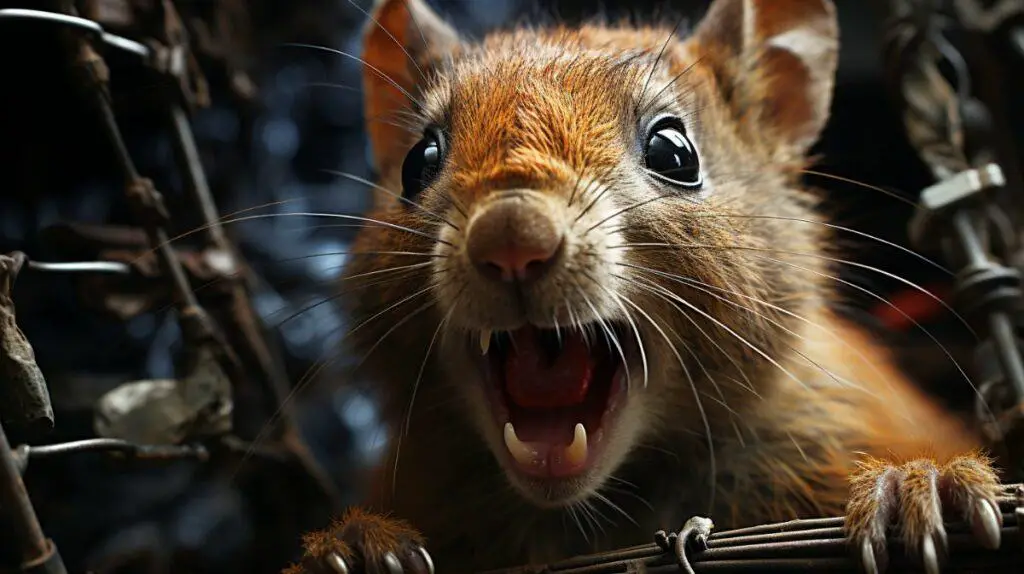
These materials are proven to stop squirrels and should form the basis of any exclusion plan:
- 1/4 inch galvanized hardware cloth: The single best material for squirrel exclusion. Use it over vents, chimneys, eaves, and any gap larger than a quarter. Secure with exterior-grade screws and washers every 4 inches.
- Galvanized steel (22-gauge or heavier): Ideal for flashing, roof-line barriers, and engine undershields. Install at a 45 degree outward angle to prevent climbing.
- Stainless steel mesh: Best for chimney caps and permanent vent covers. Does not rust and maintains its integrity for decades.
- Solid brick and concrete: The squirrel cannot damage the material itself, but can exploit cracks in mortar or settlement gaps. Repoint aging mortar and seal foundation cracks with hydraulic cement.
Best Materials for Squirrel Exclusion
For Attic and Roof Entry Points
Use 1/4 inch galvanized hardware cloth secured with exterior screws and fender washers. Cover all gable vents, soffit gaps, and ridge vent openings. Do not use staples alone; squirrels can pull the mesh loose. Space screws every 4 inches.
For Chimneys and Vents
Install a stainless steel or galvanized steel chimney cap with 1/4 inch mesh. For dryer vents and bathroom exhaust vents, replace plastic covers with metal ones backed by 1/4 inch hardware cloth.
For Wiring and Cables
Run wires through galvanized steel conduit or wrap exposed sections with stainless steel mesh sleeve. Capsaicin-based tape is available but must be reapplied. The only permanent solution is physical metal protection.
For a comprehensive list of products, read our squirrel repellent guide and squirrel trap comparison.
Frequently Asked Questions
Can squirrels chew through steel wool?
Partially. Squirrels can pull apart loose steel wool with their claws and teeth, but tightly packed steel wool combined with caulk can act as a temporary gap filler. For permanent protection, use 1/4 inch hardware cloth instead.
Can squirrels chew through PVC pipes?
Yes. Schedule 40 PVC offers minimal resistance. Squirrels have been documented chewing through PVC irrigation pipes, plumbing vents, and electrical conduit. Use galvanized steel conduit for any wiring or pipe that runs through areas with squirrel activity.
Can squirrels chew through treated lumber?
Yes. Pressure-treated wood is not squirrel-resistant. The treatment chemicals prevent rot and insect damage but do not harden the wood enough to stop squirrel incisors. Cover any exterior wood that squirrels target with galvanized steel flashing.
Can squirrels chew through wire mesh?
It depends on the mesh size and gauge. 1/4 inch galvanized hardware cloth (19-gauge or thicker) is squirrel-proof. 1/2 inch hardware cloth can be gripped and pulled apart. Chicken wire and bird netting offer no protection whatsoever.
Can a squirrel chew through a car's brake line?
Yes. Squirrels have been known to chew through rubber brake lines, coolant hoses, and wiring harnesses under vehicles. Soy-based wire coatings used by some manufacturers may attract squirrels. A metal engine undershield is the only reliable protection.
The Bottom Line
The only materials that reliably stop squirrel chewing are hard metals (galvanized steel, stainless steel) and 1/4 inch hardware cloth. Wood, plastic, vinyl, aluminum, and drywall are all vulnerable.
When excluding squirrels from your home, do not cut corners on materials. Use 1/4 inch galvanized hardware cloth for every gap, vent, and opening. Cover vulnerable wood and plastic with metal flashing. A small investment in the right materials today prevents hundreds or thousands of dollars in chew damage tomorrow.
If you need to repair existing damage, read our guides on repairing squirrel-damaged insulation and fixing chewed wires.
Decide whether DIY or professional wildlife removal is right for your repair scope.