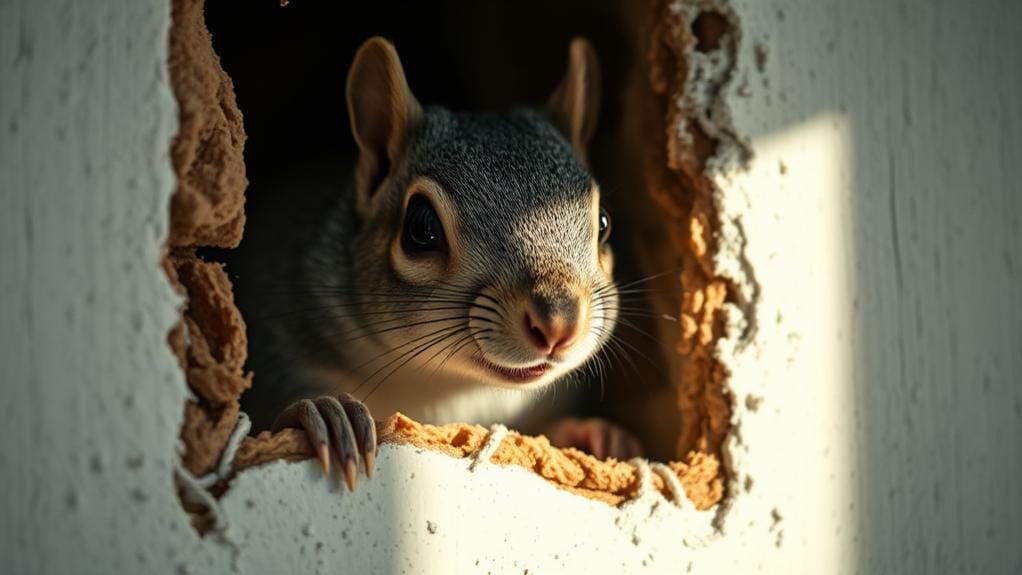
Squirrel activity in walls has distinct characteristics that set it apart from other pests:
- Time of day: Squirrels are active during daylight hours, especially early morning and late afternoon. Nocturnal sounds mean rats or raccoons.
- Sound type: Scratching, scurrying, and gnawing sounds. Squirrels move quickly and may sound larger than they are.
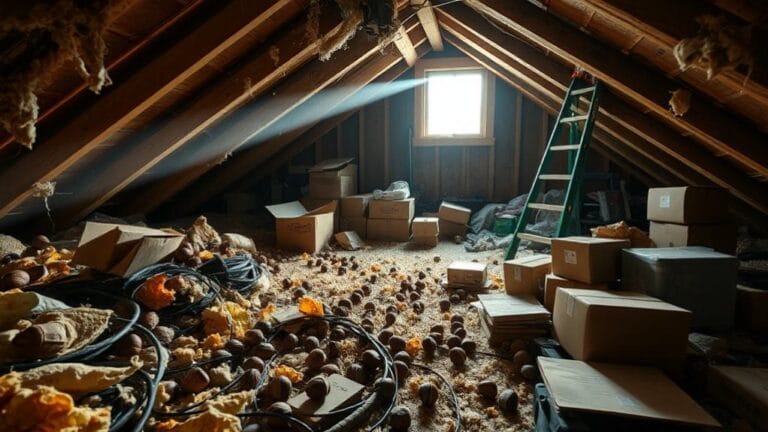
- Droppings: Oblong, 3/8 inch, similar to a grain of rice. Found near entry points or in the attic above the wall.
- Visible damage: Chewed holes the size of a golf ball near rooflines, eaves, or siding corners.
- Running sounds: Squirrels run in short bursts followed by pauses. Continuous scratching usually means a trapped animal.
Locate the Entry Point
Once you confirm a squirrel is in the wall, find where it entered. Walk the exterior of your home and inspect:
- Roof eaves and soffits for gaps or chew marks
- Gable vents and ridge vents for torn screening
- Where siding meets the roofline for separation
- Around pipes, wires, and cables entering the house
- Chimney flashing and foundation vents
Mark every gap larger than a quarter with chalk. The primary entry point will have the most obvious chew marks, grease stains from fur, and droppings nearby.
Safe Removal Methods
Tools You Will Need
- 1/4 inch galvanized hardware cloth
- Exterior-grade screws and drill
- Heavy-duty work gloves
- Flashlight
- Live trap (optional)
- Low-expansion spray foam
- Identify the primary entry hole. Go outside and find the hole nearest the scratching sound. Squirrels typically use one main entry point.
- Install a one-way exclusion door. Cut hardware cloth slightly larger than the hole. Attach at the top and sides only, leaving the bottom open. Bend it outward so the squirrel can exit but cannot re-enter. Leave in place for 7 days.
- Confirm the squirrel has left. Listen for 2 to 3 consecutive days of silence. Check for fresh droppings near the hole. The paper towel test (a crumpled towel in the hole) should remain undisturbed.
- Seal the hole permanently. Remove the exclusion door and seal with 1/4 inch hardware cloth secured with screws every 4 inches. Backfill with expanding foam and seal with caulk.
- Set a live trap (if needed). For stubborn squirrels, place a baited trap near the hole. Use peanut butter or sunflower seeds. Check every 4 hours. Relocate at least 5 miles away.
Permanent Exclusion
| Area | Sealing Method | Material |
|---|---|---|
| Roof eaves and soffits | Cover gaps with mesh | 1/4 inch hardware cloth |
| Gable vents | Replace or cover screening | 1/4 inch hardware cloth |
| Pipe and wire penetrations | Pack with steel wool, seal with caulk | Steel wool + expanding foam |
| Foundation gaps | Fill with hydraulic cement | Hydraulic cement |
| Chimney | Install cap with mesh | Stainless steel chimney cap |
For more details, read our step-by-step wall removal guide and squirrel repellent review.
Frequently Asked Questions
How long can a squirrel live trapped in a wall?
A squirrel trapped in a wall cavity without food or water survives 3 to 5 days. Dehydration and stress kill it faster than starvation. Prompt action is essential for humane reasons and to prevent the odor of a decomposing carcass.
Will a squirrel leave the wall on its own?
Not reliably. If the squirrel entered through a gap that is now blocked or if it fell into the wall cavity from the attic, it cannot find its way out without help. A one-way exclusion door is the most effective way to encourage it to leave.
What does squirrel noise in walls sound like?
Scratching, scurrying, and occasional gnawing sounds. Squirrels move in short bursts with pauses. The sound is usually louder than mice but lighter than a raccoon. If you hear running or rolling sounds, the squirrel may be in the attic above the wall.
How much does it cost to remove a squirrel from a wall?
Professional squirrel removal from walls costs $200 to $600 for a single animal, including inspection, one-way door installation, and sealing. Prices rise to $800 or more if the squirrel has died inside and the wall needs to be opened for carcass removal.
The Bottom Line
Scratching sounds in your wall during the day almost always mean a squirrel. Confirm the species, locate the entry point, install a one-way door, and seal the hole permanently after the squirrel leaves.
The entire process takes 7 to 10 days and costs less than $50 in materials for a DIY solution. Act quickly a squirrel left in the wall will cause escalating damage to wiring, insulation, and structural components. Compare DIY vs professional wildlife removal for wall noise issues.
Scratching sounds in your wall during daylight hours almost certainly mean a squirrel is inside. Squirrels are diurnal, so scratching at night usually means rats or raccoons.
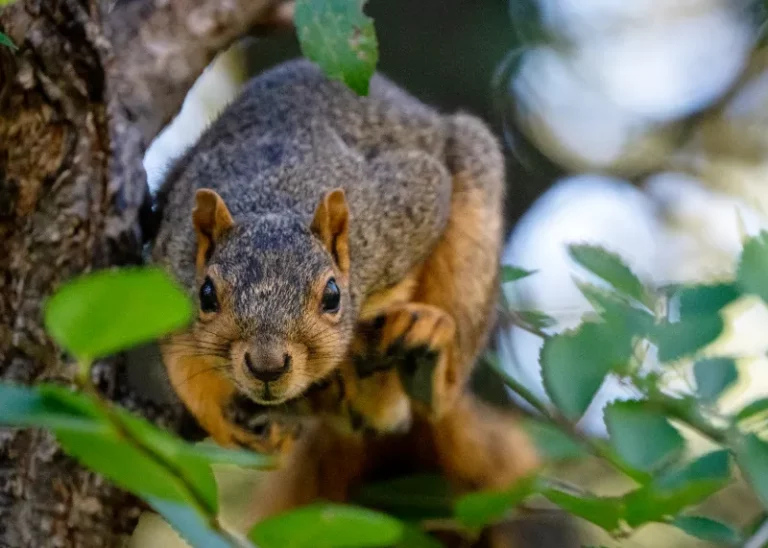
Eastern gray squirrels (Sciurus carolinensis) enter walls through gaps as small as 1.5 inches and will nest in the wall cavity, chew through wiring, and contaminate insulation. This guide covers how to confirm it is a squirrel, locate it, and get it out safely.
Key Takeaways
- Daytime scratching = squirrel. Nighttime sounds usually mean rats or raccoons.
- Locate the entry point by inspecting the exterior for chewed holes near rooflines, eaves, and vents.
- Install a one-way exclusion door to let the squirrel out without letting it back in.
- Never seal the hole while the squirrel is inside. It will die, decompose, and attract pests.
In This Guide
Confirm It Is a Squirrel in Your Wall
Squirrel activity in walls has distinct characteristics that set it apart from other pests:
- Time of day: Squirrels are active during daylight hours, especially early morning and late afternoon. Nocturnal sounds mean rats or raccoons.
- Sound type: Scratching, scurrying, and gnawing sounds. Squirrels move quickly and may sound larger than they are.
- Droppings: Oblong, 3/8 inch, similar to a grain of rice. Found near entry points or in the attic above the wall.
- Visible damage: Chewed holes the size of a golf ball near rooflines, eaves, or siding corners.
- Running sounds: Squirrels run in short bursts followed by pauses. Continuous scratching usually means a trapped animal.
Locate the Entry Point
Once you confirm a squirrel is in the wall, find where it entered. Walk the exterior of your home and inspect:
- Roof eaves and soffits for gaps or chew marks
- Gable vents and ridge vents for torn screening
- Where siding meets the roofline for separation
- Around pipes, wires, and cables entering the house
- Chimney flashing and foundation vents
Mark every gap larger than a quarter with chalk. The primary entry point will have the most obvious chew marks, grease stains from fur, and droppings nearby.
Safe Removal Methods
Tools You Will Need
- 1/4 inch galvanized hardware cloth
- Exterior-grade screws and drill
- Heavy-duty work gloves
- Flashlight
- Live trap (optional)
- Low-expansion spray foam
- Identify the primary entry hole. Go outside and find the hole nearest the scratching sound. Squirrels typically use one main entry point.
- Install a one-way exclusion door. Cut hardware cloth slightly larger than the hole. Attach at the top and sides only, leaving the bottom open. Bend it outward so the squirrel can exit but cannot re-enter. Leave in place for 7 days.
- Confirm the squirrel has left. Listen for 2 to 3 consecutive days of silence. Check for fresh droppings near the hole. The paper towel test (a crumpled towel in the hole) should remain undisturbed.
- Seal the hole permanently. Remove the exclusion door and seal with 1/4 inch hardware cloth secured with screws every 4 inches. Backfill with expanding foam and seal with caulk.
- Set a live trap (if needed). For stubborn squirrels, place a baited trap near the hole. Use peanut butter or sunflower seeds. Check every 4 hours. Relocate at least 5 miles away.
Permanent Exclusion
| Area | Sealing Method | Material |
|---|---|---|
| Roof eaves and soffits | Cover gaps with mesh | 1/4 inch hardware cloth |
| Gable vents | Replace or cover screening | 1/4 inch hardware cloth |
| Pipe and wire penetrations | Pack with steel wool, seal with caulk | Steel wool + expanding foam |
| Foundation gaps | Fill with hydraulic cement | Hydraulic cement |
| Chimney | Install cap with mesh | Stainless steel chimney cap |
For more details, read our step-by-step wall removal guide and squirrel repellent review.
Frequently Asked Questions
How long can a squirrel live trapped in a wall?
A squirrel trapped in a wall cavity without food or water survives 3 to 5 days. Dehydration and stress kill it faster than starvation. Prompt action is essential for humane reasons and to prevent the odor of a decomposing carcass.
Will a squirrel leave the wall on its own?
Not reliably. If the squirrel entered through a gap that is now blocked or if it fell into the wall cavity from the attic, it cannot find its way out without help. A one-way exclusion door is the most effective way to encourage it to leave.
What does squirrel noise in walls sound like?
Scratching, scurrying, and occasional gnawing sounds. Squirrels move in short bursts with pauses. The sound is usually louder than mice but lighter than a raccoon. If you hear running or rolling sounds, the squirrel may be in the attic above the wall.
How much does it cost to remove a squirrel from a wall?
Professional squirrel removal from walls costs $200 to $600 for a single animal, including inspection, one-way door installation, and sealing. Prices rise to $800 or more if the squirrel has died inside and the wall needs to be opened for carcass removal.
The Bottom Line
Scratching sounds in your wall during the day almost always mean a squirrel. Confirm the species, locate the entry point, install a one-way door, and seal the hole permanently after the squirrel leaves.
The entire process takes 7 to 10 days and costs less than $50 in materials for a DIY solution. Act quickly a squirrel left in the wall will cause escalating damage to wiring, insulation, and structural components. Compare DIY vs professional wildlife removal for wall noise issues.