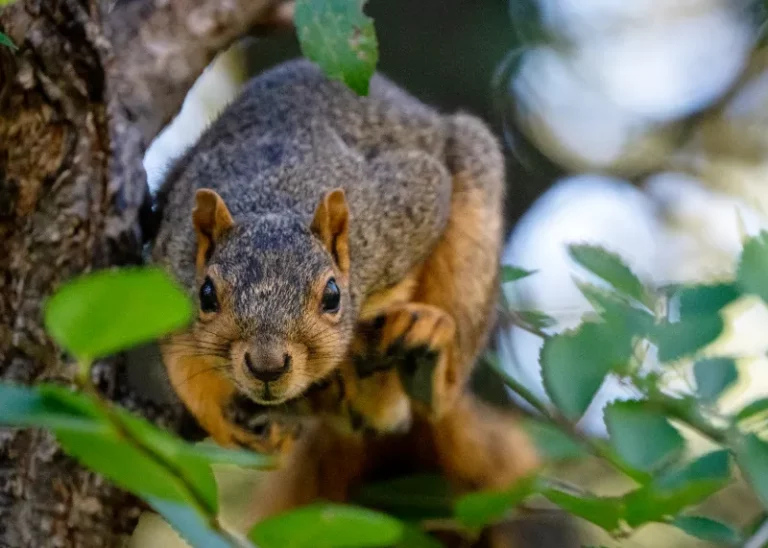
Squirrels in trees are not the problem itself but a symptom. Squirrels live in trees naturally. The issue is when they use those trees as launch points to access your roof, attic, and bird feeders.
Eastern gray squirrels (Sciurus carolinensis) and fox squirrels (Sciurus niger) can jump 8 feet from a tree branch onto your roof. Getting rid of squirrels in trees means making the tree less attractive as a pathway to your home.
Key Takeaways
- Install metal baffles on tree trunks 6 feet above ground to prevent nesting and climbing.
- Trim all branches to at least 8 feet away from your roofline.
- Use capsaicin-based sprays on the trunk and major branches to discourage climbing.
- Remove bird feeders from trees or relocate them at least 10 feet from any trunk or branch.
- Combine methods for best results; no single approach works for every squirrel population.
In This Guide
Tree Baffles: The Most Effective Solution
A metal baffle is a cone-shaped or cylinder-shaped barrier installed around a tree trunk. It prevents squirrels from climbing past it.
Install the baffle at least 6 feet above ground, with the widest end facing down. This prevents squirrels from getting a grip on the trunk and jumping over it. Use galvanized steel baffles with a diameter of at least 18 inches for best results.
Strategic Pruning
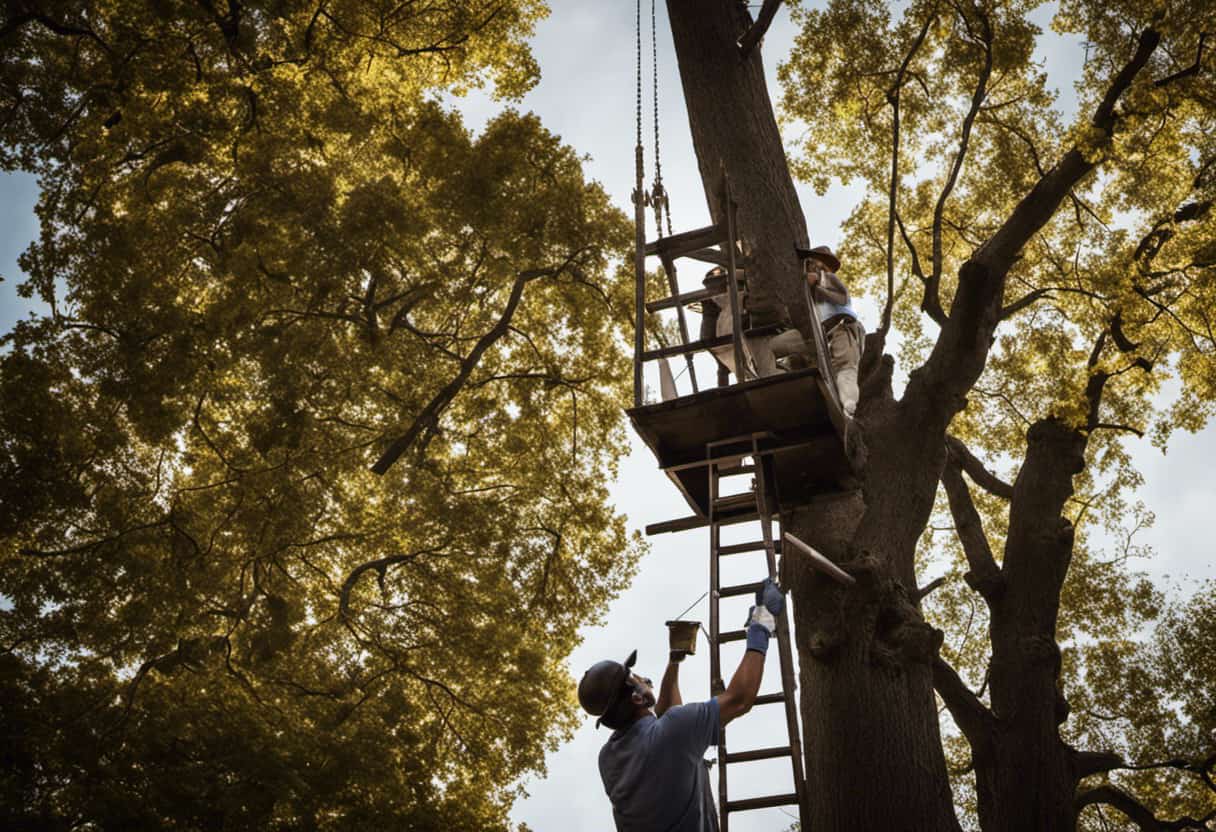
Pruning is the most cost-effective deterrent. Remove any tree branch that comes within 8 feet of your roofline, chimney, or attic vent. Squirrels use overhanging branches as highways to your home. Also remove branches that touch power lines or other structures that lead to your house. Maintain this clearance annually.
Taste Repellents That Work
Capsaicin-based sprays applied to tree trunks and major branches create a burning sensation (via the TRPV1 receptor in mammals) that repels squirrels without harming the tree.
Reapply after rain or every 7 to 10 days. Commercial products like Scoot Squirrel or Squirrel Stopper are specifically formulated for outdoor use. Avoid using mothballs or ammonia in trees , these are ineffective outdoors and can damage tree bark and soil.
Natural Deterrents
- Encourage natural predators like hawks, owls, and snakes by installing owl boxes or perches.
- Use motion-activated sprinklers near the base of problem trees to exploit neophobic behavior.
- Remove fallen nuts, acorns, and fruit from around the tree base to reduce food sources that attract foraging squirrels.
- Avoid feeding squirrels intentionally , handouts teach them that your property is a reliable food source.
Method Comparison: What Works Best
| Method | Effectiveness | Cost | Effort |
|---|---|---|---|
| Metal tree baffles | Very High | $15 to $30 per tree | 30 minutes per tree |
| Strategic pruning | High | $0 to $200 | 1 to 4 hours |
| Capsaicin-based sprays | Moderate | $15 to $25 per bottle | 10 minutes; repeat weekly |
| Motion-activated sprinklers | Moderate | $30 to $60 | 15 minutes setup |
| Ultrasonic repellent devices | Low | $20 to $50 | Plug and play |
| Mothballs or ammonia | Ineffective | $5 to $10 | 5 minutes |
Frequently Asked Questions
Do squirrel baffles really work?
Yes. Galvanized steel baffles with an 18-inch diameter or larger are nearly 100 percent effective at stopping squirrels from climbing past them. The key is installing them at the correct height (6 feet above ground) and ensuring no nearby branches or structures allow the squirrel to jump over or around the baffle.
How far can squirrels jump between trees?
Eastern gray squirrels can jump up to 8 feet horizontally and 4 feet vertically from a standing start. Fox squirrels are slightly larger and can jump similar distances. This means trees within 8 feet of each other or your house are connected highways for squirrels.
Will pruning tree branches hurt the tree?
Proper pruning done in late winter or early spring before the growing season is healthy for most trees. Avoid cutting more than 25 percent of a tree's canopy in a single year. Use clean, sharp tools and make cuts at the branch collar (not flush against the trunk) to promote proper healing.
Can I use vinegar to repel squirrels from trees?
Vinegar has limited effectiveness outdoors. The smell dissipates quickly in open air, especially after rain. Capsaicin-based sprays are significantly more effective because they create a physical burning sensation that squirrels remember and avoid, rather than a smell they can simply move away from.
How do I get a squirrel out of a tree nest?
You do not need to. Squirrels naturally live in tree nests (called dreys). The goal is to prevent them from using those trees to access your home, not to remove them from the tree itself. Focus on baffles, pruning, and repellents to break the connection between the tree and your roof.
The Bottom Line
Getting rid of squirrels in trees means breaking the pathway between the tree and your home. Install metal baffles, prune overhanging branches, and apply capsaicin repellents as needed.
The goal is not to remove squirrels from your yard , they belong there , but to make sure they stay in the trees and off your roof. Combine at least two methods for lasting results.
For complete squirrel exclusion, read our guide on how to protect your walls from squirrel damage and best squirrel repellent review.
Learn more about DIY vs professional wildlife removal for severe infestations.