Yes, you can get rid of red squirrels in your garage by sealing entry points, using live traps, and removing attractants. Red squirrels (Tamiasciurus hudsonicus) are smaller and more aggressive than eastern gray squirrels, and they will gnaw through wiring, insulation, and stored items in garages.
This guide covers how to identify them, remove them humanely, and prevent them from returning.
Key Takeaways
- Red squirrels are smaller and more territorial than gray squirrels, often entering garages through gaps as small as 1 inch.
- Seal all openings larger than a quarter with 1/4 inch galvanized hardware cloth and expanding foam to prevent entry.
- Live traps baited with sunflower seeds or peanut butter are the most effective removal method for active infestations.
- Remove food sources like bird seed, pet food, and fallen nuts near the garage to reduce squirrel traffic.
- Call a professional if the infestation involves a nursing mother or chewed electrical wiring.
In This Guide
How to Identify Red Squirrel Activity in Your Garage
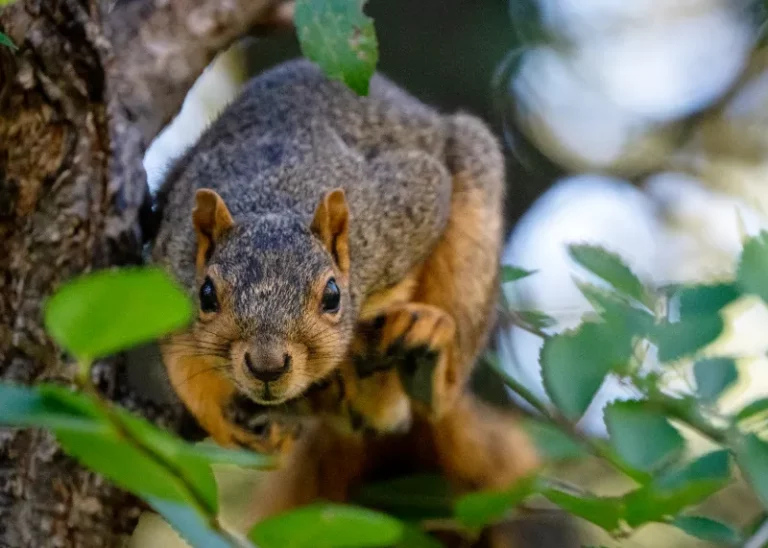
Before taking action, confirm you are dealing with red squirrels (Tamiasciurus hudsonicus) rather than eastern gray squirrels (Sciurus carolinensis), rats, or mice. Red squirrels have distinct characteristics:
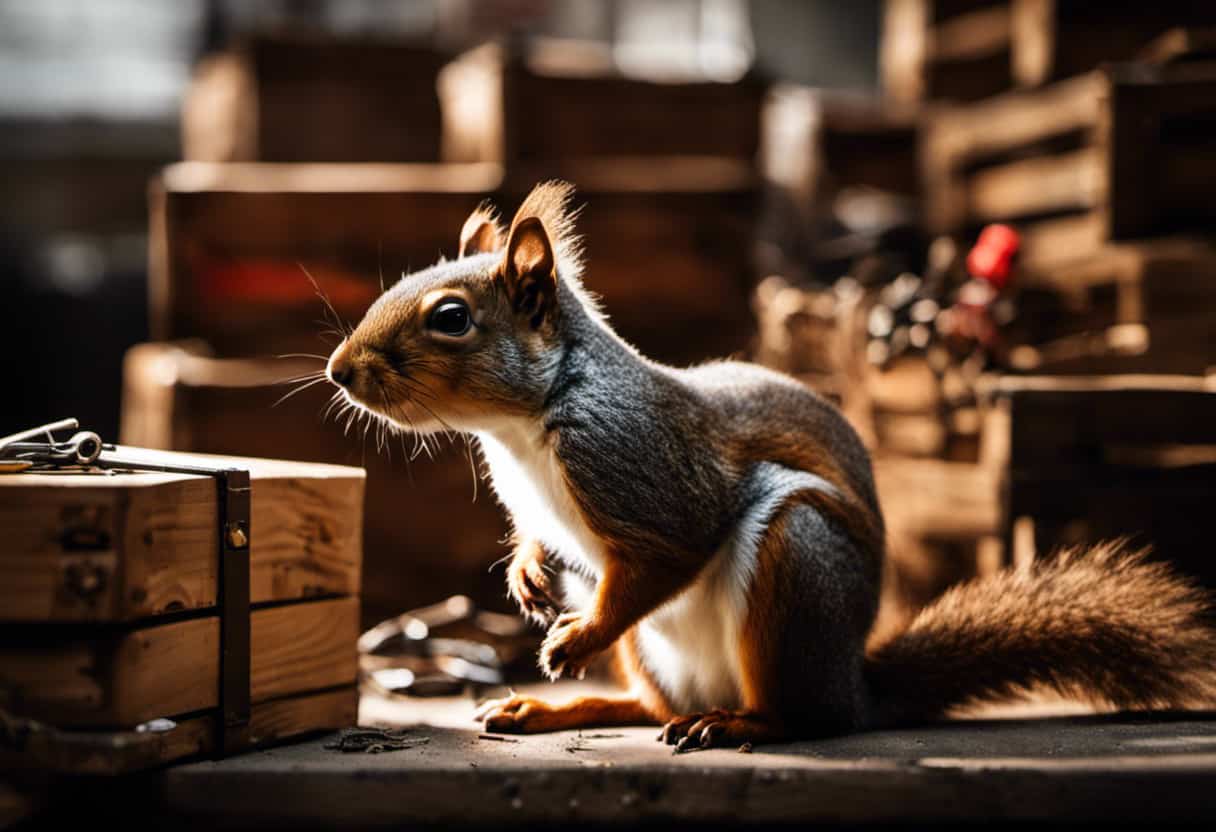
- Size and color: Red squirrels are 11 to 15 inches long (including tail) and weigh 7 to 12 ounces. They are reddish-brown with a white belly and a reddish tail with a black-tipped edge.
- Sounds: Loud chattering and scolding calls, often described as a mechanical trill, distinct from the quieter rustling of gray squirrels.
- Droppings: Oblong, 1/4 to 3/8 inch long, similar to a grain of rice but slightly smaller than gray squirrel droppings.
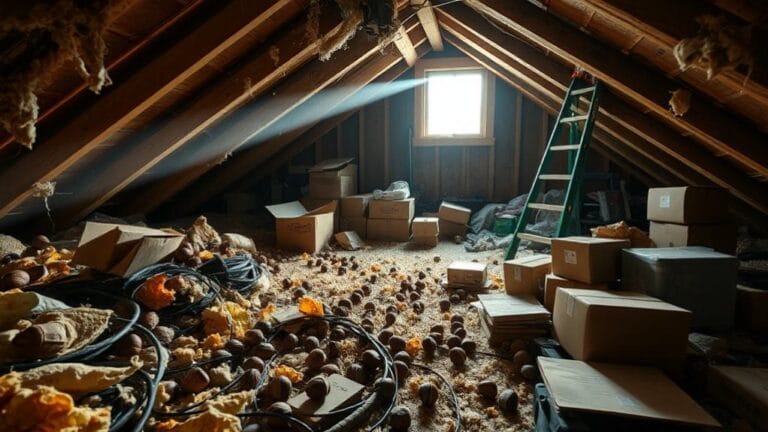
- Damage patterns: Chewed holes in plastic storage bins, gnawed wooden shelves, and shredded paper or fabric nesting material.
- Activity times: Daylight hours only, with peak activity in early morning and late afternoon. Nighttime sounds usually mean rats.
Seal All Entry Points to Your Garage
Sealing entry points is the single most effective step you can take. Red squirrels can squeeze through gaps as small as 1 inch in diameter. Inspect every part of your garage exterior and interior, looking for any opening that could serve as an entry route.
| Area to Inspect | Common Entry Points | Sealing Method |
|---|---|---|
| Garage door | Gaps under the door, worn weatherstripping | Replace bottom seal with heavy-duty rubber; install aluminum threshold |
| Walls and foundation | Cracks in concrete, gaps where pipes enter | Hydraulic cement for cracks; 1/4 inch hardware cloth + expanding foam for pipe gaps |
| Roof and eaves | Soffit gaps, loose fascia, ridge vents | 1/4 inch galvanized hardware cloth fastened with exterior screws every 4 inches |
| Windows and vents | Open or damaged vent covers, broken window screens | Replace with 1/4 inch galvanized hardware cloth; secure with washers and screws |
| Corners and joints | Where siding meets foundation, where roof meets wall | Galvanized steel L-flashing at 45 degree outward angle |
Remove Food Sources That Attract Red Squirrels
Red squirrels are driven by foraging drive and will repeatedly visit any location where they have found food. Eliminating attractants around your garage reduces their motivation to enter.
- Store bird seed, pet food, and grass seed in sealed metal containers inside the garage, not in plastic bags or bins that squirrels can chew through.
- Secure garbage bins with tight-fitting lids and bungee cords if needed.
- Remove bird feeders near the garage, or move them at least 20 feet away from the building.
- Pick up fallen nuts, acorns, and fruit from trees near the garage.
- Clean up spilled food from pet feeding areas immediately, and do not leave food bowls out overnight.
How to Humanely Trap Red Squirrels in the Garage
Tools and Materials
- Live trap (10 x 10 x 30 inches minimum)
- Sunflower seeds, unsalted peanuts, or peanut butter
- Heavy-duty work gloves
- Cardboard or thick fabric for covering the trap
- Car or truck for relocation (5 miles minimum distance)
- Set the trap near the activity zone. Place the trap along the wall or near the entry hole, not in the center of the garage. Red squirrels prefer to run along edges and are more likely to enter a trap placed against a wall.
- Bait with whole sunflower seeds or peanut butter. Red squirrels prefer sunflower seeds over other baits. Place a small pile just outside the trap entrance and a larger pile behind the trigger plate inside.
- Pre-bait for 1 to 2 days before setting the trigger. This lets the squirrel become comfortable entering the trap. Wire the trap door open and refill the bait daily. After 2 days, set the trigger.
- Check the trap every 4 hours. Once caught, do not leave the squirrel in the trap for more than 4 hours. Cover the trap with a dark cloth or cardboard to calm the animal during transport.
- Relocate at least 5 miles away. Release the squirrel in a suitable wooded area with water and natural food sources. Open the trap door from a safe distance and let the squirrel exit on its own.
Natural Deterrents That Repel Red Squirrels
In addition to sealing and trapping, natural deterrents can discourage squirrels from entering your garage. These work best as a supplement to physical exclusion, not as a replacement.
- Cayenne pepper and capsaicin spray: Sprinkle cayenne pepper along entry points and areas of activity. Capsaicin activates the TRPV1 receptor in mammals and creates a strong deterrent. Reapply after rain or every 7 days.
- Motion-activated sprinklers: Place near the garage door or under windows. The sudden spray of water exploits neophobic behavior and creates a lasting negative association.
- Ultrasonic devices (20,000 to 60,000 Hz): Limited effectiveness as a standalone solution, but may help for a few days when combined with other methods. Squirrels will habituate within 3 to 7 days.
- Predator urine (coyote or fox): Can trigger a fear response via the amygdala, but washes off quickly and needs frequent reapplication. Less effective than capsaicin.
When to Call a Professional
Some situations require a licensed wildlife control operator:
- You suspect a nursing mother with babies. Red squirrels breed twice a year (early spring and late summer). Separating a mother from her young is inhumane and can create additional problems.
- Chewed electrical wiring is present. Exposed wires create a fire hazard that requires an electrician to assess before the garage can be safely sealed.
- Multiple squirrels over several weeks. Recurring activity suggests a nearby colony or a hidden entry point you cannot identify.
- The garage is attached to the house. Squirrels in an attached garage often find their way into the main house through shared wall cavities or attic spaces.
For professional-grade trapping equipment, read our comparison guide to the best squirrel traps and squirrel repellent review.
Frequently Asked Questions
Do red squirrels cause more damage than gray squirrels?
Red squirrels are more destructive per animal because of their territorial and aggressive behavior. They will gnaw through thicker materials, store more food caches, and are harder to deter once established. However, gray squirrels are larger and can cause more structural damage to roofs and siding.
Can red squirrels chew through garage door weatherstripping?
Yes. Standard rubber or vinyl weatherstripping is no match for red squirrel incisors. Replace worn bottom seals with heavy-duty rubber seals reinforced with an aluminum threshold plate. Inspect and replace weatherstripping annually.
Will a red squirrel leave the garage on its own?
Not reliably. Red squirrels are territorial and will treat a warm, dry garage as a prime nesting location. They will leave only if they find no food, no nesting material, and an open exit. The most effective approach is to install a one-way exclusion door and seal all other exits.
How small of a gap can a red squirrel fit through?
Red squirrels can squeeze through gaps as small as 1 inch in diameter, slightly smaller than the 1.5 inch clearance needed by eastern gray squirrels. If you can fit a dime on its edge into a gap, a red squirrel can eventually widen it enough to enter.
Are red squirrels active in winter in garages?
Yes. Red squirrels do not hibernate. They remain active year-round and will seek warm shelter in garages during cold weather. Winter is actually a common time for garage infestations as squirrels look for insulated nesting sites.
The Bottom Line
Getting rid of red squirrels in your garage requires a systematic approach: identify the species, seal every entry point with 1/4 inch hardware cloth, remove food sources, and use live traps for active animals.
Red squirrels are more stubborn than their gray cousins, but the same principles apply. Act quickly, because a red squirrel that establishes a nest will attract others and cause escalating damage to wiring, insulation, and stored items.
A few weekends of exclusion work will save you hundreds in potential repairs and give you back a garage that is yours alone. Check DIY vs professional wildlife removal for stubborn red squirrel problems.