Yes, you can get a squirrel out of your wall using a one-way exclusion door, humane live traps, and strategic sealing of entry points.
The key is to let the squirrel exit on its own while preventing re-entry. Do not seal the hole with the animal inside, or you will end up with a dead squirrel decomposing in your wall cavity. This guide covers every step from detection to permanent exclusion.
Key Takeaways
- Listen for scratching sounds near dawn and dusk to confirm a squirrel is inside your wall.
- Install a one-way exclusion door over the entry hole so the squirrel can exit but not re-enter.
- Never seal squirrels inside walls , they will die, decompose, and attract pests.
- Seal all gaps larger than a quarter with 1/4 inch galvanized hardware cloth (the gold standard for squirrel exclusion) and galvanized steel flashing.
In This Guide
Signs of Squirrel Activity in Walls
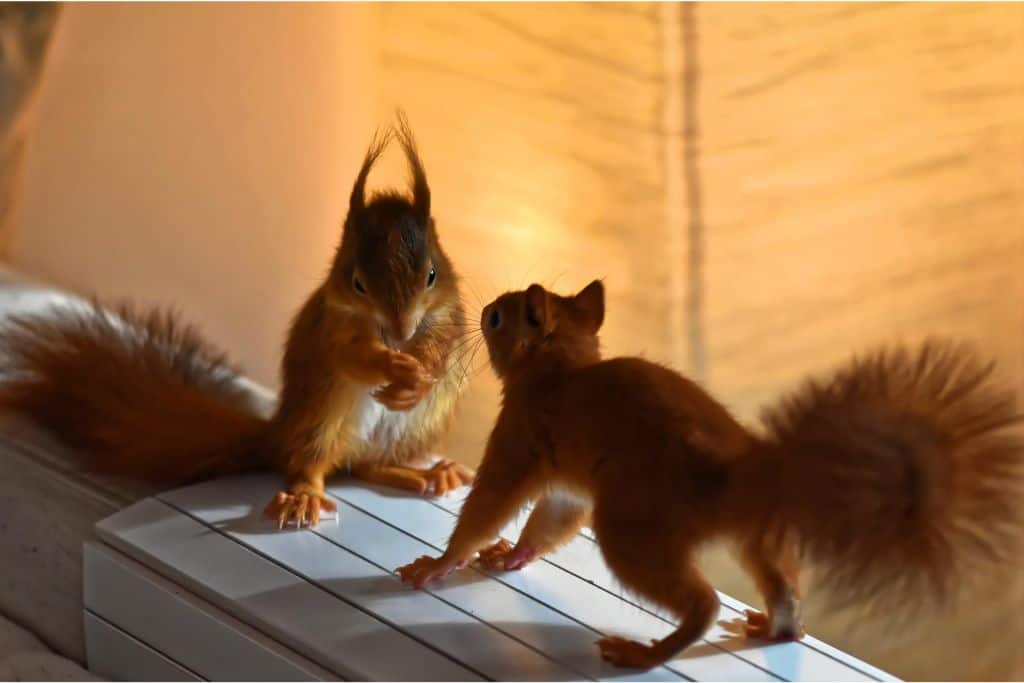
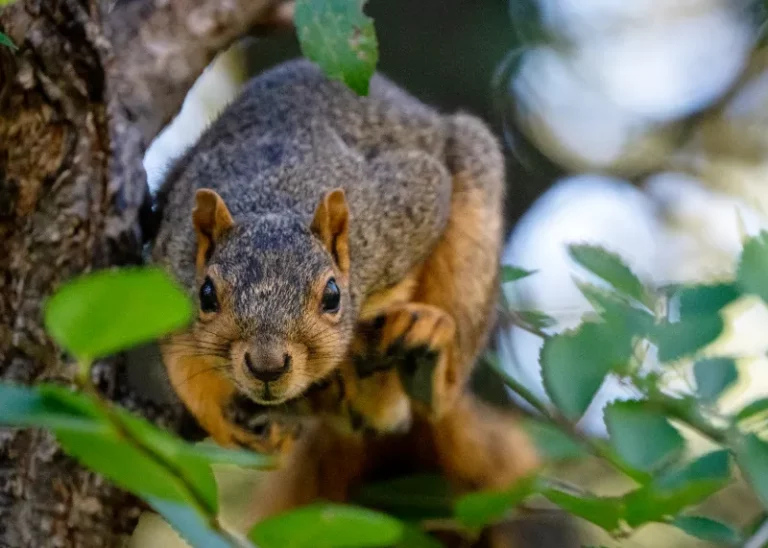
Before attempting removal, confirm you are dealing with squirrels and not another animal. Eastern gray squirrels (Sciurus carolinensis) and fox squirrels (Sciurus niger) and fox squirrels (Sciurus niger) exhibit distinct patterns:
- Scratching and scurrying sounds during daylight hours, especially early morning and late afternoon. Nocturnal sounds (nighttime) usually mean rats or raccoons.
- Chewed holes the size of a golf ball or larger along rooflines, eaves, or siding corners.
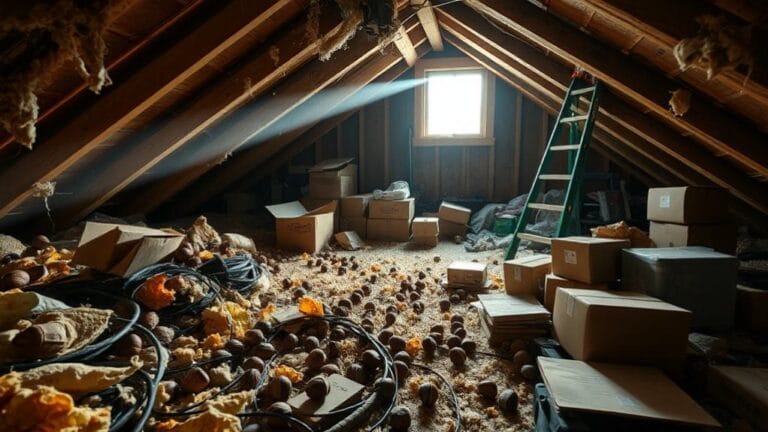
- Droppings in the attic or near wall openings. Squirrel droppings are oblong, about 3/8 inch long, similar to a grain of rice.
- Nesting material like leaves, twigs, or torn insulation visible near wall vents or gaps.
- Grease marks along entry points from the oils on squirrel fur as they squeeze through tight spaces.
Step-by-Step: How to Get a Squirrel Out of Your Wall
Follow these steps in order. Skipping steps can trap the squirrel inside or lead to re-infestation.
Tools and Materials You Will Need
- 1/4 inch galvanized hardware cloth
- One-way exclusion door or funnel
- Exterior-grade screws and drill
- Heavy-duty work gloves
- Flashlight
- Live trap (optional, for stubborn squirrels)
- Low-expansion spray foam
- Caulk and waterproof sealant
- Identify the main entry hole. Go outside and inspect your roofline, eaves, and siding. Look for the most obvious hole near where you hear scratching. Squirrels typically use one primary entry point even if there are multiple holes.
- Install a one-way exclusion door. Cut a piece of 1/4 inch galvanized hardware cloth (the gold standard for squirrel exclusion) slightly larger than the hole. Attach it at the top and sides only, leaving the bottom open. Bend it outward so the squirrel can push out but cannot re-enter. Leave this in place for 7 days.
- Confirm the squirrel has left. Listen for scratching sounds for 2 to 3 consecutive days of silence. Check for fresh droppings near the hole. If you placed a paper towel test, it should remain undisturbed.
- Seal the entry hole permanently. Once you are certain the squirrel is gone, remove the exclusion door and seal the hole with 1/4 inch galvanized hardware cloth (the gold standard for squirrel exclusion) secured with exterior-grade screws every 4 inches. Backfill around the edges with low-expansion spray foam and seal with waterproof caulk.
- Set a live trap near the hole (if needed). For squirrels that refuse to exit, place a baited live trap just outside the entry point. Use peanut butter, sunflower seeds, or whole unsalted nuts as bait. Check the trap every 4 hours and relocate caught squirrels at least 5 miles away.
Sealing Entry Points After Removal
Getting the squirrel out is only half the job. Permanent exclusion after weaning season (late summer or early fall) after weaning season (late summer or early fall) requires sealing every potential entry point on your home.
Squirrels can squeeze through gaps as small as 1.5 inches (golf ball size) (golf ball size) and will test weak spots repeatedly.
| Material | Squirrel Can Chew? | Best for Exclusion |
|---|---|---|
| 1/4 inch galvanized hardware cloth (the gold standard for squirrel exclusion) | No | The gold standard for all squirrel sealing |
| Galvanized steel flashing | No | Rooflines, eaves, foundation transitions |
| Chicken wire / poultry netting | Yes, easily | Do not use; squirrels chew through it in minutes |
| Drywall (interior) | Yes, easily | Must be backed with hardware cloth or steel |
| Wood (pine, cedar) | Yes, with effort | Cover with metal flashing or replace with composite |
| Expanding spray foam alone | Yes, easily | Use only as filler behind hardware cloth, never alone |
- Cover all vents and chimneys with 1/4 inch galvanized hardware cloth. Do not use chicken wire , squirrels can chew through it.
- Install L-shaped metal flashing at a 45 degree outward angle along rooflines to prevent climbing.
- Trim tree branches to at least 8 feet from the roofline to remove launching points.
- Seal gaps around pipes and wiring entering your home with steel wool and caulk.
- Repair damaged soffits and fascia boards where wood has rotted or warped.
When to Call a Professional
Some situations require a licensed wildlife control operator:
- You suspect a nursing mother with babies inside. Separating a mother from her young is inhumane and often illegal. A professional can locate the nest, remove the babies by hand, and set a one-way door for the mother.
- The squirrel is inside a finished wall cavity with no obvious exterior access. Cutting into drywall is best left to someone who can locate the squirrel precisely and repair the opening properly.
- Damage involves electrical wiring. Chewed wires create a fire hazard that requires an electrician to assess.
- Multiple squirrels over several weeks. Recurring infestations indicate a colony or a hidden entry route a professional can identify.
- Local laws require a licensed professional for squirrel removal. Many states and municipalities prohibit relocating squirrels without a permit.
For trapping equipment and humane removal tools, read our best squirrel traps guide and squirrel repellent review.
Frequently Asked Questions
Can squirrels cause damage inside my walls?
Yes. A squirrel trapped inside a wall cavity can gnaw through electrical wiring (creating a fire hazard), tear apart insulation (reducing R-value by 30 to 50 percent), and compromise structural wood. Repair costs for undetected wall damage typically range from $500 to $3,000.
How do I know if there are squirrels on my walls?
Listen for scratching or scampering sounds during daylight hours (squirrels are diurnal). Look for chewed holes the size of a golf ball near rooflines, oblong droppings (3/8 inch) in the attic, and grease marks around entry points from their fur. Nocturnal sounds usually mean rats or raccoons, not squirrels.
Are there any DIY methods I can try before calling a professional?
The most effective DIY method is installing a one-way exclusion door over the entry hole. This lets the squirrel exit but prevents re-entry. You can also set a live trap baited with peanut butter or sunflower seeds near the hole. Bright lights and loud noises rarely work on established squirrels.
Is it legal to trap and release squirrels on my own?
Laws regarding trapping and releasing wildlife vary by location. Checking with local authorities or wildlife agencies before attempting trapping activities is essential.
How long does it usually take to remove squirrels from walls?
With a one-way exclusion door, most squirrels leave within 24 to 48 hours. The full process including sealing takes 7 to 10 days. Live trapping can take 3 to 5 days. A nursing mother with babies adds 4 to 6 weeks until the young can exit on their own.
The Bottom Line
Getting a squirrel out of your wall is a straightforward process when you follow the right sequence: confirm the animal is a squirrel, install a one-way exclusion door, wait for it to leave, and seal the entry permanently.
The entire process takes 7 to 10 days and costs less than $50 in materials for a DIY solution. Act quickly , the longer a squirrel stays inside, the more damage it does to wiring, insulation, and structural wood.
If you found this guide helpful, read our detailed instructions on what to do about squirrel-chewed walls and how to clean up after an infestation.
Compare DIY vs professional wildlife removal to decide the best approach.