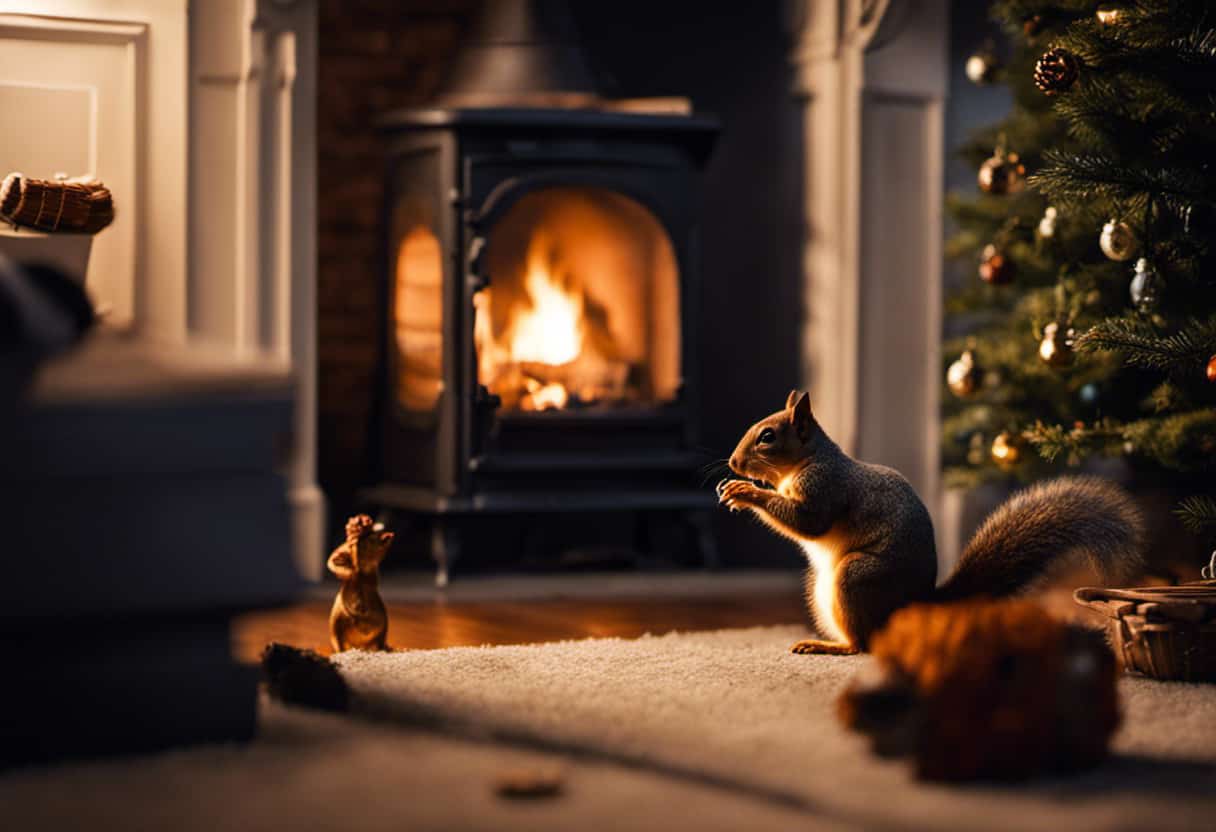
Getting a squirrel out of your fireplace requires patience, a clear exit path, and a chimney cap to prevent re-entry. Squirrels typically fall down an uncapped chimney or enter through a damaged flue.
They cannot climb back up smooth metal or tile flue liners, leaving them trapped in the firebox. This guide covers how to safely remove them, what not to do, and how to keep them out permanently.
Key Takeaways
- Open the fireplace damper and create a clear exit path to the outdoors. The squirrel will leave on its own if given a way out.
- Never light a fire or use smoke to drive a squirrel out. This can kill the animal and create a severe odor problem.
- Install a chimney cap with 1/4 inch mesh to prevent future entry. This is the only permanent solution.
- Do not use mothballs or ammonia near the fireplace. These are toxic to humans and pets and ineffective against squirrels.
In This Guide
Why Do Squirrels End Up in Fireplaces?
Squirrels do not intentionally enter fireplaces. They are attracted to the warmth and shelter of chimneys, which resemble hollow trees where they would naturally nest. The typical sequence is:
- A squirrel climbs onto the roof and investigates the chimney opening.
- It drops inside looking for nesting space or to escape a predator.
- Once inside the flue, it cannot climb back up smooth metal or glazed tile surfaces.
- The squirrel slides or falls into the firebox below.
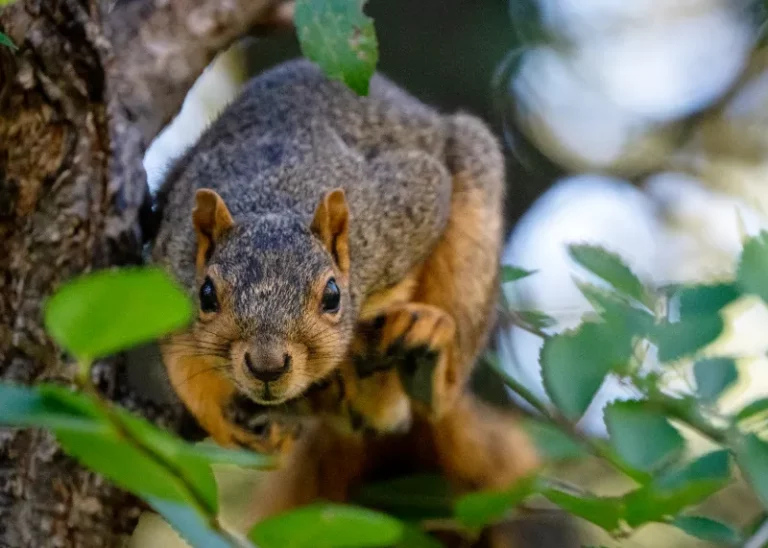
Eastern gray squirrels (Sciurus carolinensis) and fox squirrels (Sciurus niger) are the most common chimney invaders. Red squirrels (Tamiasciurus hudsonicus) are smaller and can enter through even narrower flues.
First Steps: What to Do Immediately
When you hear scratching or scrabbling sounds coming from your fireplace, follow these first steps before attempting removal:
- Do NOT light the fireplace. Smoke will not drive the squirrel out; it will only suffocate the animal and leave a decomposing carcass in your flue.
- Close the glass doors or seal the opening with cardboard and tape to prevent the squirrel from entering your living space.
- Open the damper fully if it is closed, giving the squirrel access to the firebox and a potential exit route.
- Listen to determine if there is more than one. Scratching sounds from one spot suggest a single squirrel. Multiple sounds or squeaking may indicate a litter.
- Check the chimney top from outside if you can safely access your roof. An open or damaged chimney cap is the most likely entry point.
Safe Removal: Step-by-Step Guide
Materials You Will Need
- Heavy-duty work gloves
- Cardboard or plywood for sealing the opening
- Duct tape or painter's tape
- Large towel or blanket
- Flashlight
- Live trap (optional, for stubborn squirrels)
- Chimney cap with 1/4 inch mesh (for afterward)
- Create a clear exit path to the outdoors. Open all doors and windows in the room with the fireplace. Close doors to other rooms so the squirrel cannot wander deeper into your home. Remove any obstacles between the fireplace and the nearest exterior door.
- Open the damper and secure the firebox opening. With the damper fully open, cover the fireplace opening with cardboard or plywood. Leave a 4 to 6 inch gap at the bottom so the squirrel can exit but the rest of the room stays blocked off. The squirrel will naturally move toward light and the open space.
- Wait quietly in a different room. Squirrels are neophobic and will not move while humans are present. Give the squirrel 30 to 60 minutes of silence. Check periodically without entering the room. Most squirrels will exit within 2 hours.
- If the squirrel does not leave, lower a rope or thick cloth. Tie a knotted rope or heavy towel down the chimney from the roof. This gives the squirrel a textured surface it can climb. Secure the top end and let the bottom end rest in the firebox. Check after a few hours.
- Use a live trap as a last resort. Place a live trap baited with sunflower seeds or peanut butter inside the firebox with the damper open. Check every 4 hours. Once caught, relocate the squirrel at least 5 miles away in suitable wooded habitat.
What NOT to Do When Removing a Squirrel From Your Fireplace
Common mistakes can turn a simple removal into an expensive problem. Avoid these actions:
- Do not light a fire or use smoke bombs. Smoke inhalation kills squirrels, and a dead animal in the flue will create an unbearable odor for weeks. The flue may also need professional cleaning.
- Do not use mothballs or ammonia. These substances are toxic to humans and pets and do not deter squirrels. Mothball fumes can accumulate in enclosed spaces and cause respiratory irritation.
- Do not poke or prod the squirrel with a broom. A cornered squirrel may bite through gloves or scratch. Squirrels can carry diseases and parasites.
- Do not block the top of the chimney while the squirrel is still inside. This traps the animal above the damper and makes removal far more difficult.
- Do not attempt to grab the squirrel with bare hands. Even a frightened squirrel can deliver a painful bite that requires medical attention.
How to Prevent Squirrels From Getting Into Your Fireplace
Permanent prevention is simple and inexpensive. The only reliable solution is a properly installed chimney cap.
| Prevention Method | Effectiveness | Cost |
|---|---|---|
| Chimney cap with 1/4 inch mesh | 100% | $30 to $100 |
| Wire mesh over chimney opening | High | $10 to $20 |
| Trim tree branches 8 feet from chimney | Moderate | Free to $50 |
| Ultrasonic repellent devices | Low | $20 to $50 |
| Mothballs or ammonia | Ineffective | $5 to $10 |
Install a chimney cap made of galvanized steel or stainless steel with 1/4 inch galvanized hardware cloth mesh. This blocks all animals while allowing smoke to vent. Caps are available at most hardware stores and are simple to install with basic tools.
Trim tree branches at least 8 feet from the chimney. Squirrels can leap onto the roof from overhanging branches.
Inspect and maintain the chimney cap annually. Remove debris, check for rust, and ensure the mesh is intact. A damaged cap is as useless as no cap at all.
When to Call a Professional
Some situations call for a licensed wildlife control operator or chimney professional:
- The squirrel has been trapped for more than 24 hours. Dehydration and stress can kill the animal. A professional can remove it quickly and humanely.
- You suspect a nest with babies. Nursing season for eastern gray squirrels runs March through May and July through September. If you hear high-pitched squeaking, there may be a litter inside.
- The squirrel is dead inside the flue. Do not attempt to remove a decomposing animal yourself. Hire a chimney sweep to clean and sanitize the flue.
- You cannot safely access your roof. Steep rooflines, multi-story homes, and damaged chimney mortar are best left to insured professionals.
For more squirrel removal techniques, read our squirrel trap guide and how to remove squirrels from walls.
Frequently Asked Questions
How long can a squirrel survive trapped in a fireplace?
A squirrel can survive 1 to 3 days trapped in a fireplace without food or water, depending on temperature and stress levels. Hot weather causes dehydration faster. Cold weather can lead to hypothermia in an exposed flue. Prompt removal is essential for humane reasons.
Can a squirrel climb back up a chimney on its own?
It depends on the flue material. Squirrels can climb rough clay tile flues and brick chimneys more easily than smooth metal liners. Many modern stainless steel flue liners are impossible for squirrels to climb. If the squirrel has been in your fireplace for more than a few hours and has not escaped, it likely needs help.
Will a squirrel damage my fireplace?
Generally no. Squirrels trapped in a fireplace are focused on escape, not damage. They may scratch the firebox walls and leave droppings, but they rarely cause structural damage. The greater risk is damage from a professional extraction if you wait too long and the squirrel dies inside the flue.
Do chimney caps really stop squirrels?
Yes. A properly installed chimney cap with 1/4 inch galvanized hardware cloth mesh is 100 percent effective at preventing squirrel entry. This is the most reliable wildlife prevention measure for any home with a fireplace. Caps also block rain, leaves, and birds from entering the flue.
What if there are baby squirrels in the chimney?
Do not attempt removal yourself. A nursing mother will be aggressive and may abandon her young if disturbed. Contact a licensed wildlife rehabilitator or control operator who can remove the mother and babies together and reunite them after exclusion.
The Bottom Line
Getting a squirrel out of your fireplace is a straightforward process when you follow the right steps: create an exit path, wait quietly, and never light a fire with the animal inside.
The permanent fix is a chimney cap with 1/4 inch mesh, which costs $30 to $100 and takes 30 minutes to install. Without a cap, the same squirrel or another will find its way back in. Take the time to cap your chimney, and you will never need to remove a squirrel from your fireplace again.
A few dollars and a half hour of work on the roof will save you the frustration of scratching sounds during every quiet evening by the fire. Read about DIY vs professional wildlife removal for chimney situations.