Table of Contents
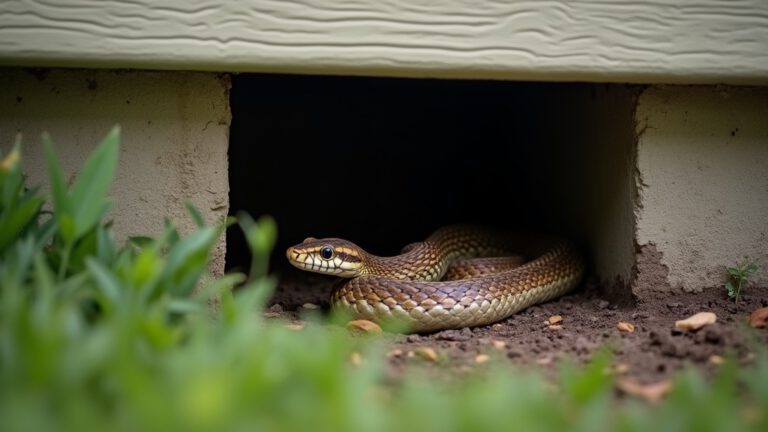
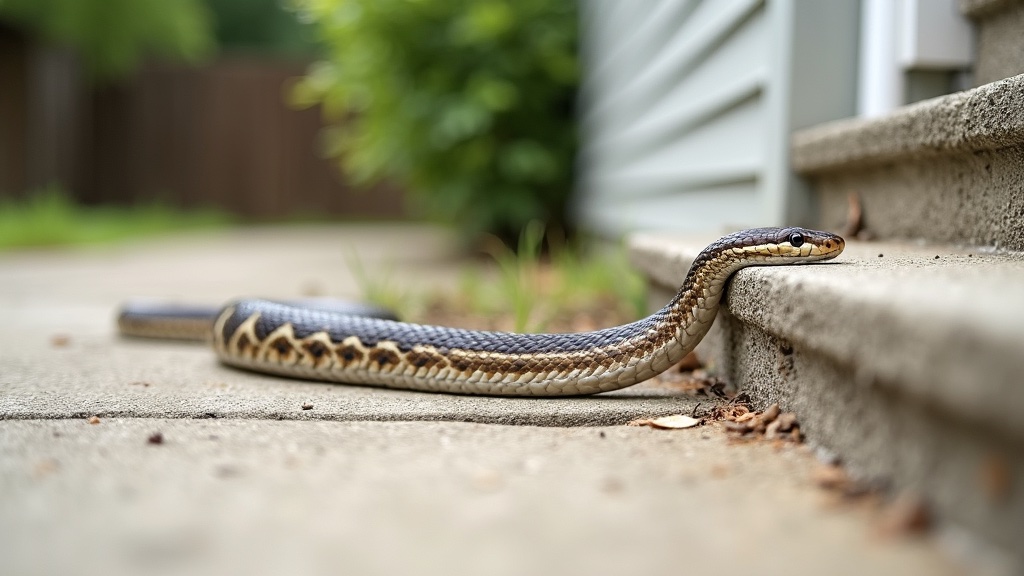
Getting rid of snakes under your concrete slab requires sealing entry points, removing food sources, and using exclusion techniques. Snakes seek shelter under slabs because they offer cool, dark, moist environments with access to rodents and insects. This guide covers the most effective methods.
Key Takeaways
- Seal all gaps around the slab with 1/4 inch hardware cloth, hydraulic cement, or expanding foam.
- Remove food sources like rodents and insects that attract snakes under the slab.
- Install snake-proof fencing around the perimeter, buried 6 inches deep.
- Call a professional for venomous snakes or large infestations.
Find How Snakes Are Entering
Inspect the slab perimeter for these common entry points:
- Expansion gaps between the slab and foundation walls
- Cracks in the concrete wider than 1/4 inch
- Gaps around pipes and utility penetrations
- Deteriorated mortar in block foundations
- Weep holes and drainage openings
Removal Methods
- Install a one-way exclusion door over the main entry point. The snake can exit but cannot re-enter. Leave in place for 2-3 weeks.
- Set up glue traps near entry points. Check daily. Release non-venomous snakes with vegetable oil. Call a professional for venomous species.
- Remove rodent populations under the slab. Snakes follow food sources. Eliminate mice, rats, and insects.
- Reduce moisture. Fix leaks and improve drainage. Snakes need moist environments.
- Call a professional for venomous snakes or if you cannot locate the entry points.
Seal the Slab Permanently
For more, read our snake barrier guide and snake hole guide.
Frequently Asked Questions
How do snakes get under a concrete slab?
Snakes enter through expansion gaps, cracks in the concrete, gaps around pipes, and weep holes. Even a gap of 1/4 inch is large enough for a young snake. Older slabs with settlement cracks or deteriorated mortar are especially vulnerable.
Can snakes damage a concrete slab?
No. Snakes cannot damage concrete. The slab itself is safe. The concern is that snakes can enter your home through gaps in the slab or foundation. Sealing the gaps protects your home.
What attracts snakes under a concrete slab?
Snakes are attracted by cool, dark, moist conditions and the presence of prey (rodents, insects). If you have a rodent problem under the slab, snakes will follow. Eliminate the food source and the snakes will leave.
How much does it cost to seal a slab against snakes?
DIY sealing costs $50 to $200 for materials. Professional sealing costs $200 to $600 depending on the size of the slab and the number of entry points.
The Bottom Line
Getting rid of snakes under a concrete slab requires identifying entry points, removing existing snakes with exclusion doors or traps, and sealing all gaps permanently. The most important step is sealing the slab perimeter with 1/4 inch hardware cloth and hydraulic cement. Remove food sources (rodents) and reduce moisture to make the area less attractive to snakes.