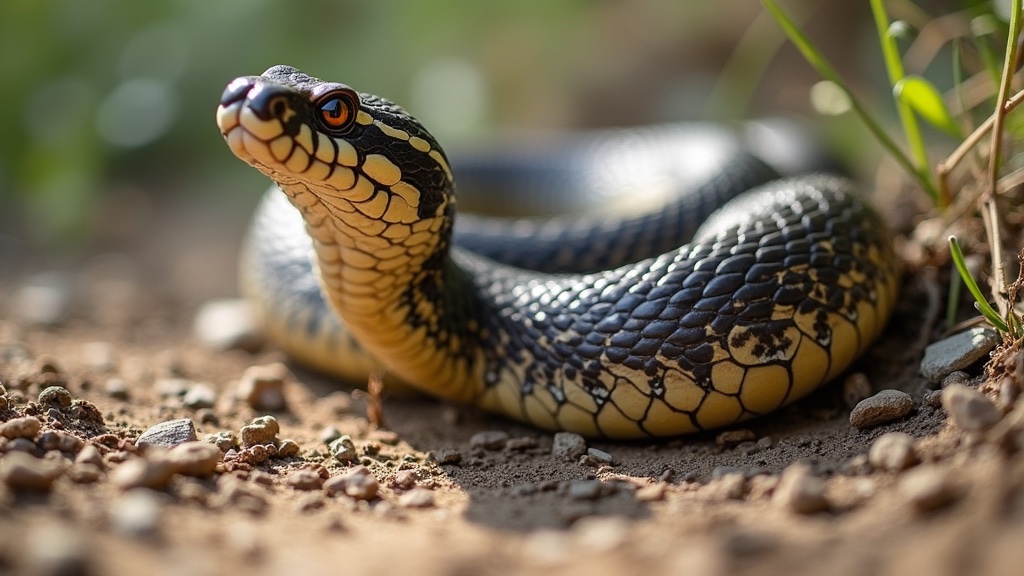

Finding a snake in your basement requires staying calm, containing the snake, and giving it an escape route. Basements provide cool, dark, moist conditions that snakes find attractive, especially during hot or cold weather. Most basement snakes are non-venomous. This guide covers what to do.
Key Takeaways
- Stay calm and identify the snake from a safe distance before taking action.
- Open the basement door or window to give the snake an escape route.
- Use a long-handled tool to gently guide the snake toward the exit.
- Seal gaps in the foundation and around pipes after removal to prevent future entry.
In This Guide
What to Do If You Find a Snake in Your Basement
- Do not panic. Most basement snakes are non-venomous. Stay at least 10 feet away.
- Identify the snake from a safe distance. Look at the head shape. Triangular head likely means venomous. If you cannot identify it, treat it as venomous.
- Open an exterior door or window to give the snake an escape route. Most snakes will leave within 30 minutes if they have a clear path.
- Use a long-handled tool to gently guide the snake toward the open door if it does not leave on its own.
- Call a professional for venomous snakes or if the snake has hidden behind stored items.
- If the snake disappears, place glue traps along the walls and check every 4 hours. The snake will likely follow the wall and get caught on the trap.
Prevention
>- Seal all foundation cracks with hydraulic cement.
- Seal gaps around pipes entering the basement with expanding foam and steel wool.
- Cover basement windows with 1/4 inch hardware cloth.
- Install a door sweep on the basement door.
- Reduce moisture with a dehumidifier or vapor barrier.
- Remove clutter that provides snake hiding spots.
For more, read our snake ID guide.
Frequently Asked Questions
How do snakes get into basements?
Snakes enter basements through foundation cracks, gaps around pipes, open windows, and gaps under doors. A gap of 1/4 inch is enough for a young snake. Crawlspace vents that are damaged or missing are also common entry points.
Are snakes common in basements?
Basements are the indoor space most likely to harbor snakes. They offer cool, dark, moist conditions and often have cracks and gaps that provide entry. Snakes are especially common in basements during hot summer weather or cold winter snaps.
Will a snake leave my basement on its own?
Most snakes will leave within 30 minutes to 2 hours if given an open door or window. However, if the basement provides ideal conditions, the snake may stay longer. Active guidance with a long-handled tool is often necessary.
What should I do if I cannot find the snake in my basement?
If you saw a snake enter the basement but cannot find it, place glue traps along the walls (snakes travel along walls for cover). Check the traps every 4 hours. Leave the basement door or window open overnight. Call a professional if you do not find it within 24 hours.
The Bottom Line
A snake in your basement is manageable. Stay calm, identify the snake from a safe distance, and open an exterior door or window to give it an escape route.
Use a long-handled tool to guide it toward the exit if necessary. After removal, seal foundation cracks, gaps around pipes, and install door sweeps to prevent future entry. Most basement snakes are non-venomous and more scared of you than you are of them.