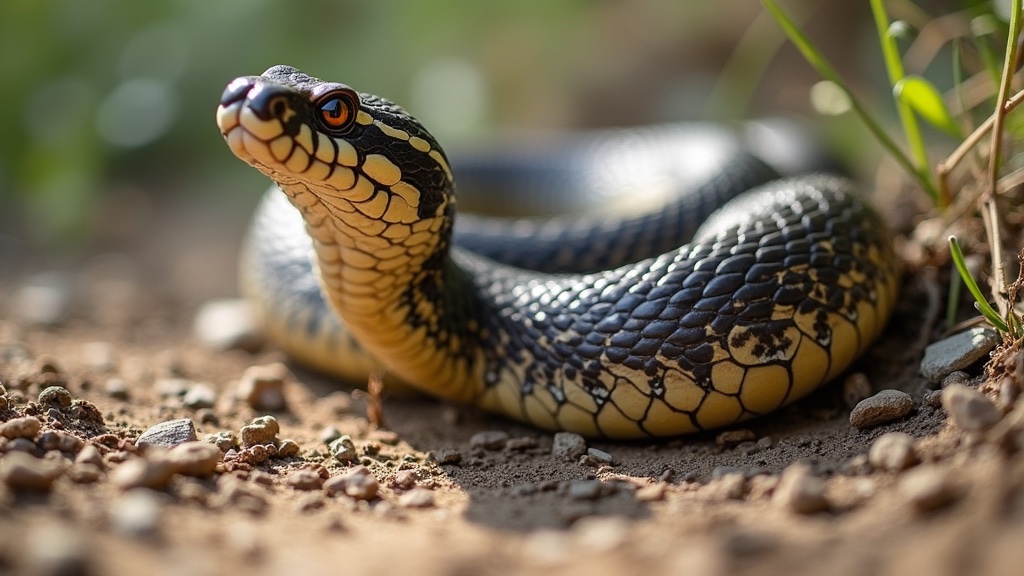
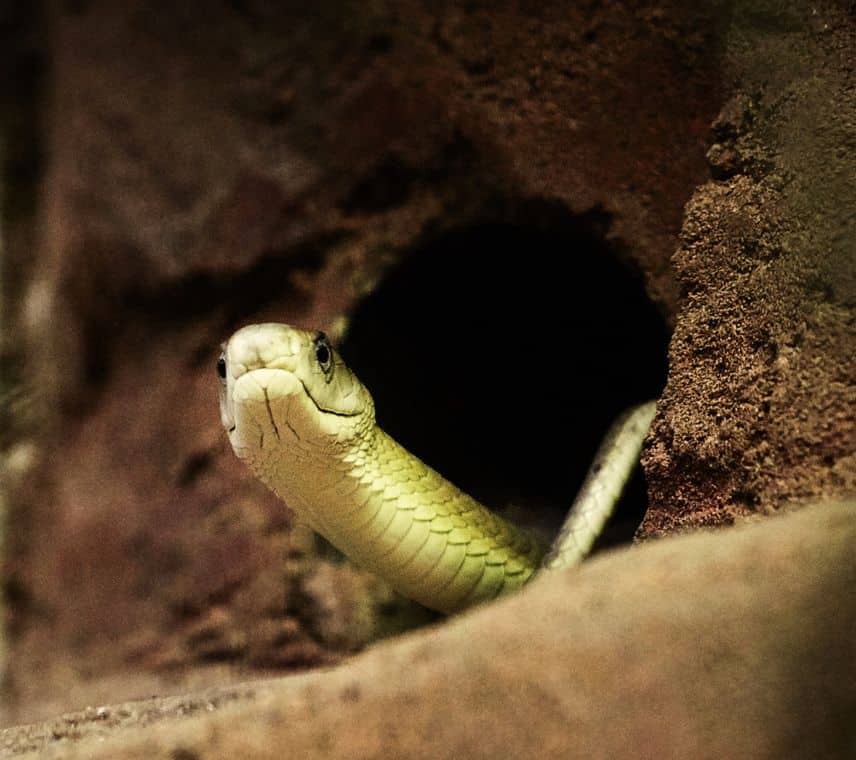
Most snakes do not dig their own holes; they use existing burrows created by rodents, turtles, or other animals. Snakes are not equipped with the digging tools that burrowing animals have.
Their bodies are designed for slithering, not excavating. However, some species like worm snakes and hognose snakes are capable of limited burrowing in loose soil. This guide explains how snake holes are created and how to identify them.
Key Takeaways
- Most snakes do not dig their own holes. They use existing burrows from rodents, moles, or turtles.
- Some species can burrow in loose soil, including hognose snakes and worm snakes.
- Snake holes are typically circular with smooth edges, often found near foundations, rocks, or logs.
- Identifying the hole correctly helps determine if snakes are present or if it is another animal.
In This Guide
Do Snakes Dig Holes in the Ground?
The short answer is: most snakes do not. Snakes lack the strong limbs, claws, or digging tools that true burrowing animals have. Instead, they are opportunistic dwellers that take over existing holes. Here is how different snakes handle burrowing:
| Snake Type | Digging Ability | Typical Shelter |
|---|---|---|
| Garter snakes | Cannot dig | Use rodent burrows, rock crevices |
| Rat snakes | Cannot dig | Tree hollows, rock piles, attics |
| Hognose snakes | Can dig in loose soil | Uses shovel-like snout to burrow |
| Worm snakes | Limited burrowing | Burrows in loose leaf litter and soil |
| Rattlesnakes | Cannot dig | Use rodent burrows, rock crevices |
| Copperheads | Cannot dig | Leaf litter, rock piles, logs |
What Snake Holes Look Like
- Circular or oval openings with smooth, worn edges from repeated use.
- 1-3 inches in diameter depending on the snake species.
- Located near foundations, rocks, logs, or dense vegetation.
- No excavated dirt pile around the entrance. True digging animals leave dirt mounds.
- May have shed snake skin nearby or inside the entrance.
Identifying Active Snake Holes
- Look for fresh tracks in mud or dust near the hole. Snake tracks are S-shaped trails.
- Check for shed skin near the entrance. Snakes shed their skin as they grow.
- Watch for activity during warm weather. Snakes are most active in spring and fall.
- Plug the hole lightly with leaves or tissue. If it is disturbed the next day, the hole is active.
- Listen for rattling if you suspect rattlesnakes. Never reach into a hole.
For more, read our snake hole identification guide and snake barrier guide.
Frequently Asked Questions
How can I tell if a hole is a snake hole or a rodent hole?
Snake holes have smooth, circular openings with no dirt mound. Rodent holes have a dirt pile at the entrance and are often smaller. Snake holes may have shed skin nearby. If you see a spider web across the entrance, the hole is inactive.
Do snakes hibernate in holes?
Yes. Snakes brumate (the reptile version of hibernation) in underground dens during winter. They often share dens with other snakes and even other species. These dens are called hibernacula and are typically located below the frost line.
Should I fill in a snake hole?
Only after you are certain the snake has left. Fill the hole with dirt, gravel, or expanding foam, and monitor for signs of re-excavation. If the hole is near your foundation, seal it permanently with 1/4 inch hardware cloth.
What animals dig holes that snakes use?
Snakes commonly use holes dug by: mice, rats, voles, moles, chipmunks, ground squirrels, turtles, and crayfish. Any hole large enough for a snake to enter is a potential shelter. Controlling rodent populations reduces snake habitat.
The Bottom Line
Most snakes do not dig their own holes. They use existing burrows created by rodents, turtles, and other animals. Snake holes are circular with smooth edges and no dirt mound.
The best way to identify a snake hole is to look for shed skin, fresh tracks, and activity near the entrance. If you find a snake hole near your home, seal it after confirming it is empty, and control rodent populations to reduce snake habitat.