Table of Contents
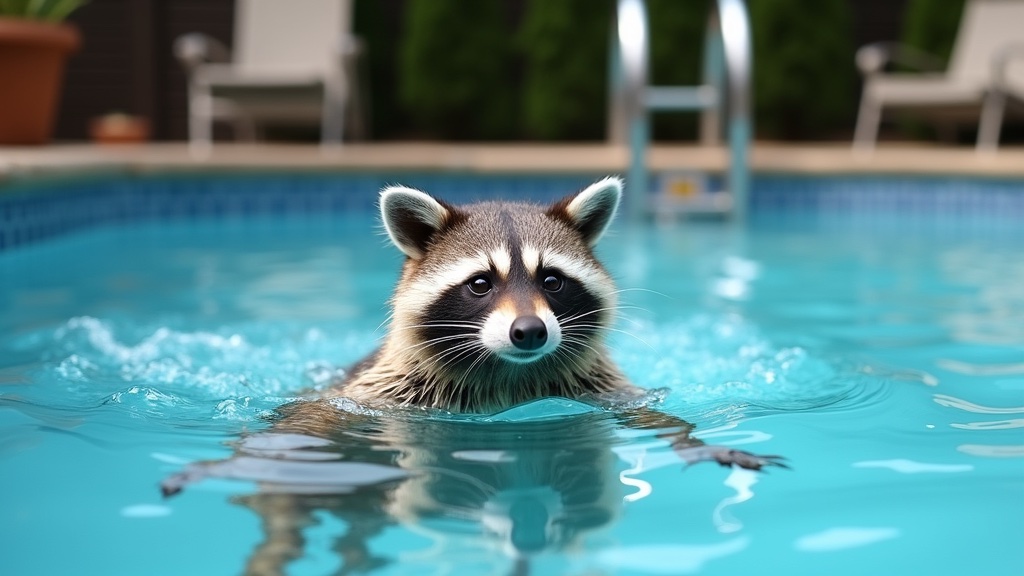
A raccoon in your pool needs immediate action to protect both the animal and your family’s health. Raccoons (Procyon lotor) can carry raccoon roundworm (Baylisascaris procyonis), leptospirosis, and other pathogens in their droppings. If a raccoon has been in your pool, the water must be treated before anyone swims. This guide covers rescue, cleanup, and prevention.
Key Takeaways
- Remove the raccoon from the pool using a skimmer, pool float, or ramp. Do not touch it directly.
- Shock the pool with chlorine to 40 ppm and run the filter for 24 hours after removal.
- Install a Skamper-Ramp or FrogLog to give wildlife an escape route from your pool.
- Trim tree branches at least 8 feet from the pool edge to prevent raccoons from falling in.
In This Guide
Rescue the Raccoon From the Pool
If you find a raccoon in your pool, act quickly but calmly. A panicked raccoon may drown or injure itself trying to escape.
- Put on heavy-duty gloves. Raccoons can bite and scratch even when exhausted. Wear leather or thick rubber gloves.
- Extend a rescue tool. Use a pool skimmer, float, or a sturdy branch. Let the raccoon grab onto it. Do not try to grab the raccoon directly.
- Guide the raccoon to the shallow end or a ramp. If you have a Skamper-Ramp or FrogLog installed, guide the raccoon toward it. Otherwise, lift the raccoon gently with the skimmer and place it on the pool deck.
- Let the raccoon leave on its own. Once out of the water, the raccoon will likely run away. Do not corner it. Give it a clear escape route.
- Contact a wildlife rehabilitator if the raccoon appears injured, exhausted, or disoriented. Do not attempt to care for it yourself.
Clean and Sanitize the Pool
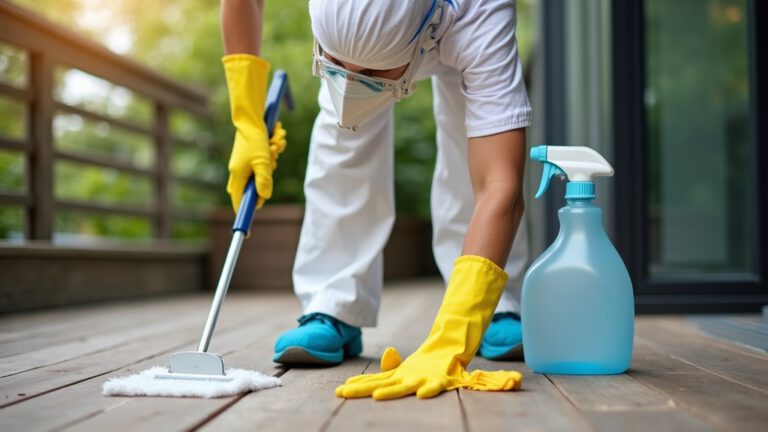
- Remove visible debris. Use a skimmer net to remove leaves, droppings, and other debris from the water.
- Test and adjust pH. Balance the pH to 7.2-7.6 before shocking.
- Shock the pool with chlorine. Raise chlorine levels to 40 ppm. Run the pump and filter continuously for 24 hours.
- Vacuum the pool. After 24 hours, vacuum the pool thoroughly. Use a wet vacuum with a HEPA filter if available.
- Test the water. Before swimming, test chlorine levels. They should be back to normal range (1-3 ppm). Do not swim until levels are safe.
Prevent Future Incidents
| Prevention Method | Effectiveness | Cost |
|---|---|---|
| Skamper-Ramp or FrogLog | Excellent | $25 to $40 |
| Pool cover | Excellent | $200 to $3,000 |
| Trim tree branches (8 ft clearance) | Good | $0 to $200 |
| Motion-activated lights | Moderate | $20 to $50 |
For more pool safety, read our raccoon roof guide and attic removal guide.
Frequently Asked Questions
Is it safe to swim after a raccoon in the pool?
No. Raccoon droppings can contain harmful pathogens. You must shock the pool, run the filter for 24 hours, and retest the water before swimming. Do not swim until chlorine levels return to normal.
Can raccoons drown in pools?
Yes. Raccoons are good swimmers but can become exhausted and drown if they cannot find an exit. Without a ramp or ledge, they may swim in circles until they tire. An escape ramp is essential for wildlife safety.
How do I keep raccoons out of my pool at night?
Cover the pool when not in use, install motion-activated lights, trim tree branches, and remove food sources from the pool area. A Skamper-Ramp provides an escape route if a raccoon does enter the water.
Will a pool cover stop a raccoon?
A sturdy pool cover can prevent raccoons from entering the water, but raccoons can walk on pool covers and may damage them. Automatic covers are more effective than manual covers. Always secure the cover tightly.
The Bottom Line
A raccoon in your pool is a health hazard that requires immediate action. Rescue the animal using a skimmer or ramp, then shock the pool with chlorine to 40 ppm and run the filter for 24 hours. Prevent future incidents by installing a Skamper-Ramp, covering the pool, and trimming tree branches. An escape ramp is the single most important investment for wildlife safety around your pool.