
Table of Contents
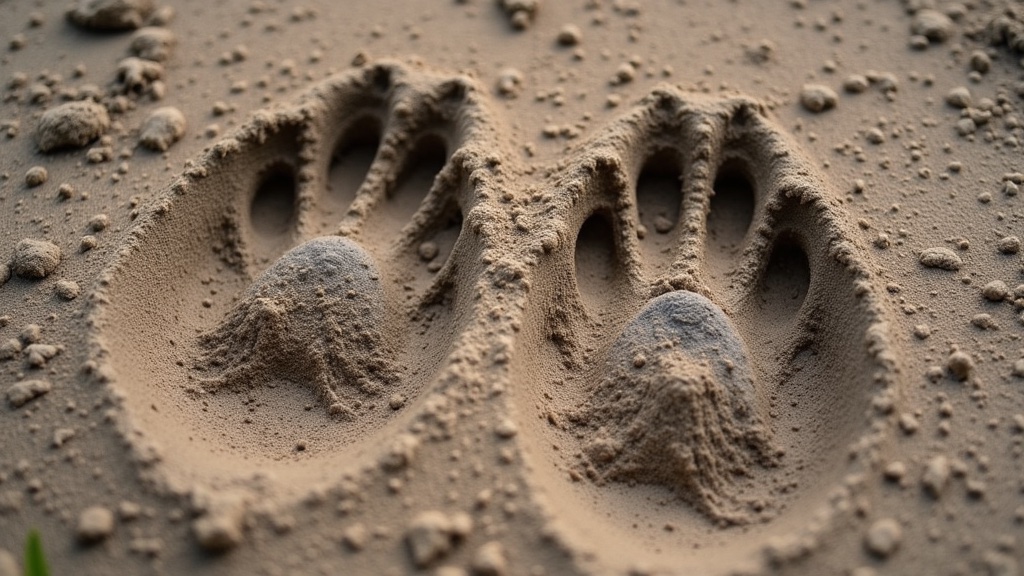
Raccoon tracks are distinctive and easy to identify once you know what to look for. Raccoons (Procyon lotor) have hand-like paws with five long toes and visible claw marks. Their tracks are often found in muddy areas near water sources, around garbage cans, and at the base of trees. This guide covers how to identify raccoon tracks and distinguish them from other animals.
Key Takeaways
- Raccoon tracks look like tiny human handprints with five long toes and visible claw marks.
- Front paws are about 2-3 inches wide, hind paws are slightly larger and narrower.
- Tracks appear in pairs spaced 10-18 inches apart as raccoons walk with a pacing gait.
- Look for tracks in mud, sand, or snow near water sources, garbage cans, and trees.
In This Guide
Raccoon Paw Anatomy
Raccoon paws are unique among common urban wildlife. Key features:
- Five toes on both front and hind paws, arranged like a human hand.
- Long, slender toes with visible claw marks at the tips.
- Palm pad is C-shaped or kidney-shaped, distinct from the toe pads.
- Front paws are wider and more hand-like. Hind paws are longer and narrower.
- Claw marks are usually visible because raccoons do not retract their claws like cats.
How to Identify Raccoon Tracks
- Size: Front paw tracks are 2-3 inches wide, 2-3.5 inches long. Hind paws are slightly larger.
- Shape: Five long, finger-like toes radiating from a C-shaped palm pad.
- Gait: Raccoons walk with a pacing gait, placing the front and hind foot on the same side nearly together. This creates pairs of tracks spaced 10-18 inches apart.
- Claw marks: Small indentations at the tip of each toe print are usually visible.
- Overlap: Hind feet often land partially on top of the front foot tracks, creating a messy pattern.
| Feature | Raccoon | Opossum | Skunk | Dog |
|---|---|---|---|---|
| Toes | 5 long, finger-like | 5, splayed | 5 with visible claws | 4, rounded |
| Palm pad | C-shaped | Triangular | Kidney-shaped | Triangular |
| Claw marks | Visible | Often visible | Visible | Visible |
| Track size | 2-3 inches | 2-3 inches | 1.5-2 inches | 2-4 inches |
| Gait pattern | Pairs (pacing) | Pairs (pacing) | Direct register | Diagonal walk |
| Opposable thumb | No | Yes (on hind foot) | No | No |
Where to Find Raccoon Tracks
Raccoon tracks are most commonly found in these locations:
- Muddy or sandy areas near ponds, streams, and puddles
- Under bird feeders where raccoons forage for spilled seed
- Around garbage cans where raccoons try to access food
- At the base of trees where raccoons climb
- Under decks and porches where raccoons den
- On patios and decks near pet food bowls or water sources
For more raccoon identification, read our raccoon poop identification guide and raccoon behavior guide.
Frequently Asked Questions
How big are raccoon tracks?
Raccoon front paw tracks are 2 to 3 inches wide and 2 to 3.5 inches long. Hind paws are slightly larger but narrower. The tracks are roughly the size of a human child’s hand.
Do raccoons have opposable thumbs?
Raccoons do not have opposable thumbs, but their paws are incredibly dexterous. They have four times the tactile sensitivity of human hands and can manipulate objects, open latches, and twist doorknobs. This is why their tracks look so hand-like.
How can I tell raccoon tracks from opossum tracks?
Opossum tracks also have five toes, but the hind foot has an opposable thumb (a toe that sticks out at a right angle). Raccoon tracks have a C-shaped palm pad, while opossum pads are more triangular. Opossum tracks also show a more splayed toe arrangement.
When is the best time to find raccoon tracks?
Early morning after rain is the best time to find raccoon tracks. Fresh mud preserves the finest details. Snow also preserves tracks well, but melting can distort the shape. Raccoons are most active at night, so fresh tracks are usually found in the morning.
The Bottom Line
Raccoon tracks are easy to identify by their hand-like shape with five long toes and a C-shaped palm pad. Look for tracks in muddy areas near water sources, garbage cans, and under trees. The tracks are about 2-3 inches wide and appear in pairs spaced 10-18 inches apart. Knowing how to identify raccoon tracks helps you confirm raccoon activity on your property and take appropriate action.