Table of Contents
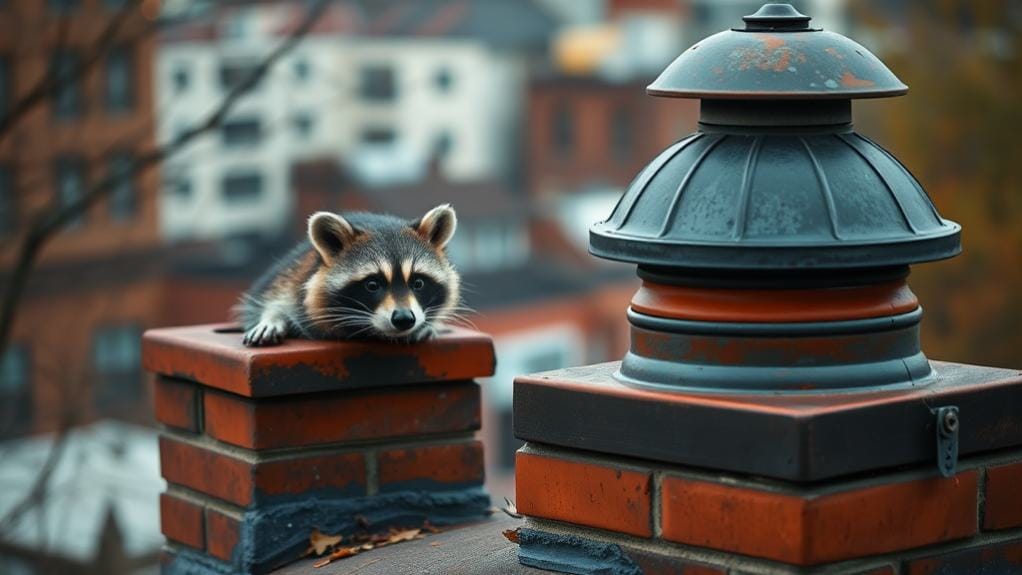
Getting rid of raccoons in your chimney requires a combination of eviction, exclusion, and permanent prevention. Raccoons (Procyon lotor) enter chimneys through uncapped flues, attracted by the warmth and shelter. Once inside, they can damage the chimney liner, create noise, and leave droppings that carry diseases. This guide covers 10 steps to remove them safely and keep them out.
Key Takeaways
- Confirm the raccoon is in the chimney by listening for scratching and thumping sounds, especially at night.
- Never light a fire with a raccoon in the chimney. Smoke will kill the animal and create odor problems.
- Install a one-way exclusion door or lower a rope to help the raccoon escape.
- Install a chimney cap with 1/4 inch mesh after removal to prevent re-entry permanently.
In This Guide
Confirm the Raccoon Is in the Chimney
Before starting, make sure the animal is a raccoon and not a squirrel, bird, or other animal:
- Heavy thumping sounds at night. Raccoons are larger and heavier than squirrels, so the noise is louder.
- Chattering, hissing, or growling sounds coming from the chimney.
- Droppings around the chimney base on the roof. Raccoon droppings are large, tubular, and dark.
- Visible damage to the chimney cap or flashing.
- Paw prints on the roof near the chimney.
Safety First
10 Steps to Remove a Raccoon From Your Chimney
- Listen at the fireplace. Open the damper slightly and listen. If the raccoon is in the firebox, close the damper and call a professional. If the sound is above the damper, proceed with the steps below.
- Inspect the chimney from the roof. Safely access your roof and check the chimney cap. If it is damaged or missing, that is the entry point. Wear safety gear and use a sturdy ladder.
- Lower a knotted rope or heavy towel. Tie knots every 12 inches in a thick rope and lower it down the chimney from the top. The raccoon can climb the rope to escape. Secure the top end.
- Play loud music near the fireplace. Place a radio tuned to a talk station near the fireplace opening. The unfamiliar noise exploits raccoon neophobia and encourages them to leave.
- Use bright lights. Shine a bright work light up the chimney from the fireplace. Raccoons are nocturnal and prefer darkness. The light makes the space uncomfortable.
- Install a one-way exclusion door. A professional can install a one-way door at the chimney top. The raccoon exits but cannot re-enter. Leave in place for 7 days.
- Check for babies. Listen for high-pitched squeaking sounds. Raccoon breeding season runs January through June. If babies are present, wait until they are old enough to exit (8-10 weeks) or call a wildlife rehabilitator.
- Confirm the raccoon has left. Listen for 2 to 3 consecutive nights of silence. Sprinkle flour near the chimney base to check for fresh tracks.
- Install a chimney cap. Once the raccoon is gone, install a stainless steel chimney cap with 1/4 inch galvanized hardware cloth mesh. This is the only permanent prevention.
- Clean and sanitize. After removal, clean the chimney and fireplace. Raccoon droppings can carry raccoon roundworm (Baylisascaris procyonis). Wear protective gear and use a HEPA vacuum.
Permanent Prevention
| Prevention Method | Effectiveness | Cost |
|---|---|---|
| Chimney cap with 1/4 inch mesh | 100% | $30 to $100 |
| Trim tree branches 8 ft from chimney | Moderate | Free to $50 |
| Repair damaged flashing | High | $100 to $300 |
| Loud music or lights (temporary) | Low | $0 |
For more help, read our attic removal guide and raccoon behavior guide.
Frequently Asked Questions
How long can a raccoon survive in a chimney?
A raccoon can survive 3 to 5 days in a chimney without food or water. In hot weather, dehydration can kill it within 48 hours. Prompt action is essential for humane reasons.
Can a raccoon climb out of a chimney on its own?
Raccoons are excellent climbers and can climb out of rough brick or clay tile chimneys. However, modern smooth stainless steel flue liners are impossible to climb. If the raccoon has been in the chimney for more than a few hours, it likely needs help.
Will a raccoon damage my chimney?
A trapped raccoon may scratch the flue liner, dislodge soot, and damage the damper. The greater risk is a dead raccoon blocking the flue, which can cause smoke backup. A raccoon that has nested in the chimney may also damage the chimney cap and flashing.
How much does it cost to remove a raccoon from a chimney?
Professional removal costs $200 to $600, including inspection, one-way door installation, and chimney cap installation. Emergency services cost more. DIY removal using a knotted rope or exclusion door costs $30 to $100 for materials.
The Bottom Line
Getting rid of raccoons in your chimney requires patience and a systematic approach. Never light a fire with the animal inside. Use a knotted rope, bright lights, and loud music to encourage the raccoon to leave. Install a chimney cap with 1/4 inch mesh for permanent prevention. If the raccoon has been trapped for more than 24 hours or if babies are present, call a professional wildlife control operator.