Table of Contents
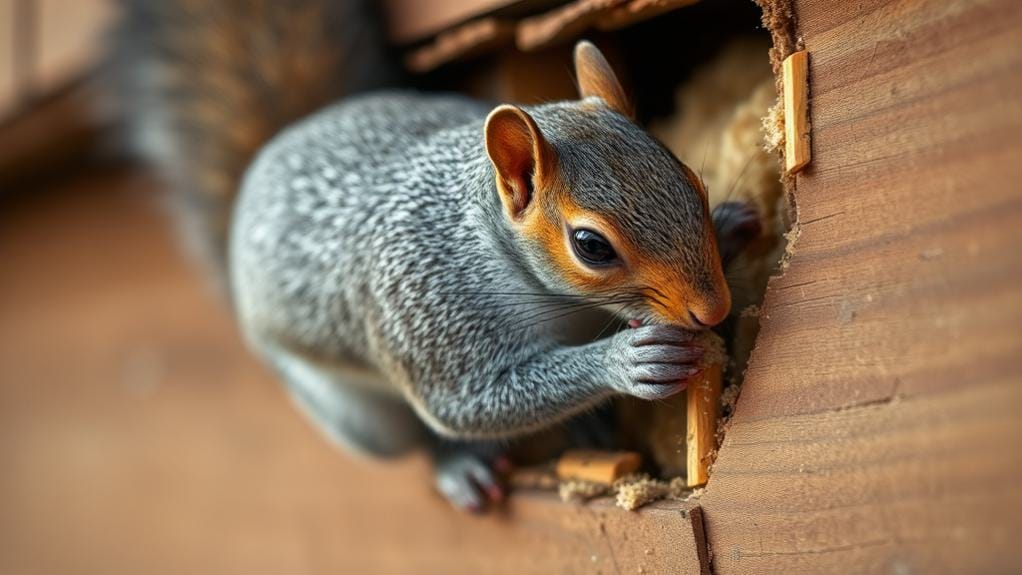
Yes, squirrels can chew through most wall materials, including drywall, wood, and aluminum siding. Eastern gray squirrels (Sciurus carolinensis) have incisors that grow up to 6 inches per year, and gnawing is essential for keeping them sharp and short. This guide covers which wall materials are vulnerable and how to protect your home.
Key Takeaways
- Squirrels chew through drywall, wood, and soft metals like aluminum, but not solid brick or galvanized steel.
- They can fit through holes as small as 1.5 inches after chewing the opening larger.
- Seal all gaps with 1/4 inch hardware cloth to prevent squirrel entry.
- Call a professional if you suspect chewed wiring or structural damage.
In This Guide
Wall Materials Squirrels Can Chew Through
| Material | Can Squirrels Chew It? | Best Defense |
|---|---|---|
| Drywall | Yes, easily | Back with hardware cloth before patching |
| Wood (pine, cedar) | Yes, easily | Cover with metal flashing |
| Aluminum siding | Yes, with effort | Replace with steel or cover with hardware cloth |
| Vinyl siding | Yes, easily | Replace with steel or composite |
| Brick (solid) | No | Check mortar integrity |
| Galvanized steel | No | Use for all exclusion work |
| 1/4 inch hardware cloth | No | The gold standard for exclusion |
Signs of Squirrel-Chewed Walls
- Visible chew holes the size of a quarter or larger along rooflines and siding.
- Drywall dust or debris collecting below suspected entry points.
- Scratching sounds inside walls, especially near dawn and dusk.
- Droppings near entry points or in the attic.
- Grease marks around holes from fur rubbing against the edges.
How to Repair Squirrel-Chewed Walls
- Confirm the squirrel is gone. Listen for 2-3 consecutive days of silence. Use a paper towel test in the hole.
- Clean the area. Remove debris, droppings, and nesting material. Wear protective gear.
- Install hardware cloth. Cut 1/4 inch hardware cloth larger than the hole. Secure it behind the hole with screws.
- Patch the hole. Use drywall patch, wood filler, or vinyl patch material. Paint to match.
- Seal the exterior. From outside, seal the same entry point with hardware cloth and caulk.
For more, read our squirrel signs guide and squirrel noise guide.
Frequently Asked Questions
Can squirrels chew through brick walls?
No. Solid brick is too hard for squirrel teeth. However, squirrels can exploit deteriorated mortar between bricks. Repoint aging mortar with Type S or N mix to prevent entry.
How long does it take a squirrel to chew through drywall?
A determined squirrel can chew through standard 1/2 inch drywall in under 5 minutes. The gypsum core offers little resistance. This is why hardware cloth backing is essential for repairs.
Can squirrels chew through steel wool?
Squirrels can pull apart loosely packed steel wool. Use 1/4 inch hardware cloth for permanent repairs. Steel wool can be used as a temporary filler but must be combined with a rigid barrier.
Will a squirrel eventually leave the wall on its own?
Not reliably. A squirrel that has entered a wall cavity may stay indefinitely, especially during breeding season. Use a one-way exclusion door or live trap to remove it. Never seal the hole with the animal inside.
The Bottom Line
Squirrels can chew through drywall, wood, aluminum, and vinyl, but not through galvanized steel, solid brick, or 1/4 inch hardware cloth. If you have chewed walls, confirm the squirrel is gone, back the repair with hardware cloth, and seal the exterior entry point permanently. The key to preventing squirrel damage is exclusion: use 1/4 inch hardware cloth over every potential entry point.