Table of Contents
Getting rid of red squirrels in your garage requires sealing entry points, removing food sources, and using live traps. Red squirrels (Tamiasciurus hudsonicus) are smaller and more aggressive than gray squirrels. They can squeeze through gaps as small as 1 inch and will chew through wiring, insulation, and stored items. This guide covers proven removal methods.
Key Takeaways
- Seal all gaps larger than 1/4 inch with 1/4 inch hardware cloth, steel wool, and expanding foam.
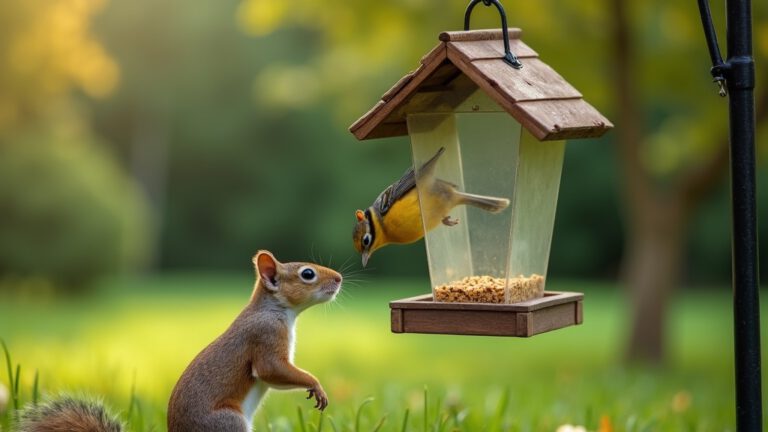
- Remove food sources like birdseed, pet food, and garbage to make the garage less attractive.
- Use a live trap baited with sunflower seeds or peanut butter for active removal.
- Install a one-way exclusion door to let the squirrel out without allowing re-entry.
In This Guide
Signs of Red Squirrels in Your Garage
- Chewed holes in walls, doors, or storage containers
- Nesting material like leaves, twigs, and shredded paper
- Droppings on shelves, floors, or near entry points
- Scratching sounds from walls or ceilings
- Chewed wiring in the garage ceiling or walls
- Missing or damaged stored items like birdseed or pet food
Seal Entry Points
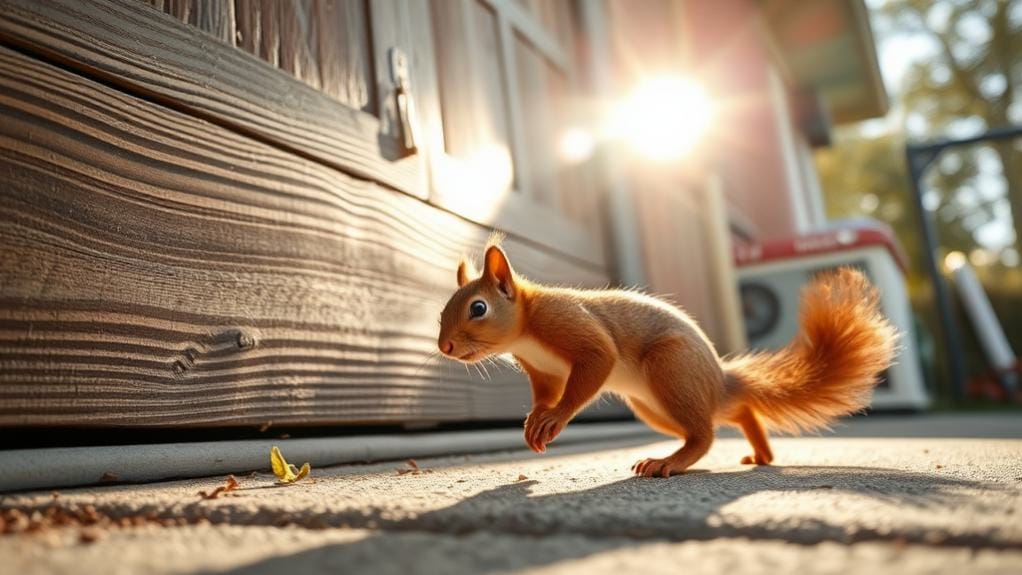
Inspect the garage thoroughly for gaps. Red squirrels can squeeze through openings as small as 1 inch. Common entry points include:
- Garage door gaps at the bottom and sides
- Wall cracks and foundation gaps
- Vents and windows without screens
- Gaps around pipes and utility penetrations
- Eaves and soffits where the roof meets the wall
Seal all gaps with 1/4 inch galvanized hardware cloth, steel wool packed into holes, and expanding foam for larger gaps. Replace worn weatherstripping on the garage door.
Removal Methods
- Set a live trap. Use a 10 x 10 x 30 inch trap baited with sunflower seeds, peanut butter, or unsalted nuts. Place it along the wall where the squirrel travels.
- Check the trap every 4 hours. Do not leave a trapped squirrel for more than 4 hours. Cover the trap with a towel to calm the animal.
- Relocate the squirrel. Release it at least 5 miles away in suitable wooded habitat. Check local regulations before relocating.
- Install a one-way exclusion door. If you know the entry point, install a one-way door over the hole. The squirrel can exit but cannot re-enter.
- Call a professional. If the infestation is large or you cannot locate the entry point, call a wildlife control operator.
Prevention
- Store birdseed, pet food, and grass seed in sealed metal containers.
- Keep the garage clean and free of clutter that could provide nesting material.
- Inspect the garage regularly for new gaps or signs of activity.
- Install motion-activated lights to deter nighttime activity.
For more, read our squirrel signs guide and squirrel damage guide.
Frequently Asked Questions
How do red squirrels get into garages?
Red squirrels enter through gaps in garage doors, damaged vents, wall cracks, and gaps around pipes. They can squeeze through openings as small as 1 inch. Inspect the entire garage perimeter for potential entry points.
Will a red squirrel leave my garage on its own?
Not reliably. If the garage offers food and shelter, the squirrel may stay indefinitely. Use a one-way exclusion door or live trap to encourage it to leave.
Can red squirrels damage my car in the garage?
Yes. Red squirrels can chew through wiring, hoses, and insulation under the hood. They may also nest in the engine bay. A metal engine undershield is the best protection.
Are red squirrels more destructive than gray squirrels?
Red squirrels are more territorial and may cause more damage per animal. They are smaller, which allows them to access tighter spaces. However, gray squirrels are larger and can cause more structural damage to roofs and siding.
The Bottom Line
Getting rid of red squirrels in your garage requires sealing entry points, removing food sources, and using live traps or one-way exclusion doors. Red squirrels are persistent and can cause significant damage to wiring, insulation, and stored items. Act quickly when you notice signs of activity. The longer they remain, the more damage they cause.