Table of Contents
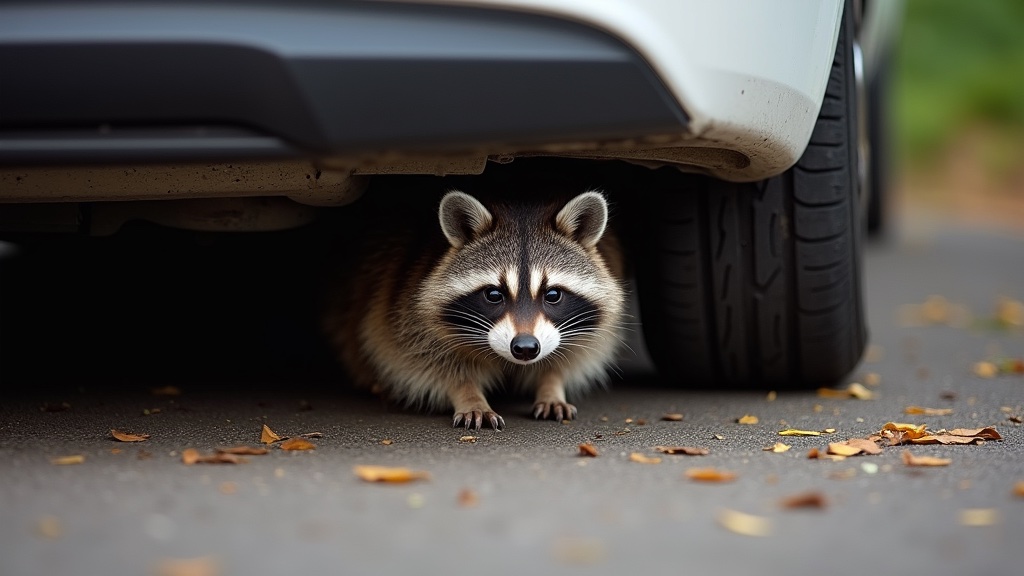
Finding a raccoon in your car engine requires a safe removal strategy that protects both you and the animal. Raccoons (Procyon lotor) seek warm engine bays for shelter, especially in cold weather. They can chew through wiring, hoses, and insulation, causing expensive damage. This guide covers 5 steps to remove a raccoon from your car engine safely.
Key Takeaways
- Do not start the engine if you suspect a raccoon is in the engine bay. This can injure or kill the animal.
- Pop the hood and leave it open to make the engine bay less inviting. Raccoons seek dark, enclosed spaces.
- Use bright lights and loud noise to encourage the raccoon to leave on its own.
- Install a metal engine undershield to prevent future access.
In This Guide
Signs of a Raccoon in Your Engine
- Nesting material like leaves, twigs, or insulation visible under the hood
- Chewed wires or hoses with visible gnaw marks
- Droppings on the engine block or splash shield
- Scratching sounds when you approach the car
- Paw prints on the hood, fenders, or windshield
5 Steps to Remove a Raccoon From Your Engine
- Do not start the engine. Starting the engine can injure or kill the raccoon and damage your engine components. Remove the keys from the ignition.
- Pop the hood and leave it open. This removes the darkness and shelter the raccoon is seeking. Leave the hood open for several hours.
- Use bright lights and noise. Shine a bright work light into the engine bay and place a loud radio nearby. Raccoons are nocturnal and neophobic. The unfamiliar stimuli will encourage them to leave.
- Check for the raccoon after 2-4 hours. Look for signs that the raccoon has left. Listen for scratching sounds. Check for fresh droppings or disturbed nesting material outside the engine bay.
- Call a professional if the raccoon does not leave within 4 hours, or if you suspect chewed wiring. Do not attempt to grab or poke the raccoon.
Prevention
- Install a metal engine undershield to block access from underneath.
- Park in a sealed garage if possible.
- Drive the car regularly. A car that is driven daily is less likely to have raccoon problems.
- Apply capsaicin-based repellent to wires and hoses. Reapply every 7 days.
For more, read our car raccoon prevention guide.
Frequently Asked Questions
Can a raccoon cause a car fire?
Yes. Raccoons chewing through electrical wiring can expose copper conductors, causing shorts, arcing, and fires. If you suspect chewed wiring, have a mechanic inspect the engine bay before driving.
How long will a raccoon stay in an engine bay?
A raccoon may stay in an engine bay for several days if it feels safe and warm. The engine’s residual heat after driving is attractive in cold weather. Active harassment methods (lights, noise, open hood) usually drive it out within a few hours.
Will a raccoon chew through my car’s brake lines?
Raccoons can chew through rubber brake lines, coolant hoses, and wiring harnesses. A metal engine undershield is the only reliable protection against this type of damage.
How do I know if a raccoon has left my engine?
Check for signs of activity: fresh droppings, disturbed nesting material, or paw prints. Listen for scratching sounds. If you have not seen or heard signs for 24 hours, the raccoon has likely moved on. Have a mechanic inspect the engine bay before driving.
The Bottom Line
A raccoon in your car engine is a common problem in cold weather. Do not start the engine. Pop the hood, use bright lights and noise, and wait. Most raccoons leave within a few hours. If the animal does not leave or you suspect damage, call a professional. A metal engine undershield is the best long-term prevention.